
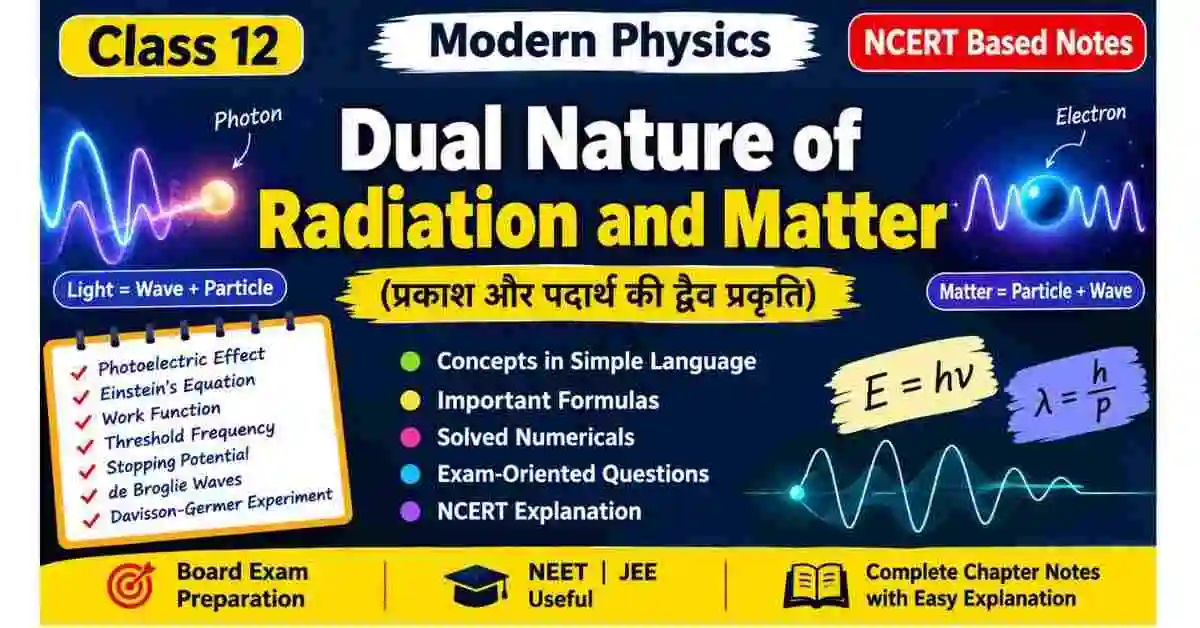
Dual Nature of Radiation and Matter Class 12 Notes in Hindi में आपको Modern Physics के इस महत्वपूर्ण chapter को आसान और सरल भाषा में समझाया गया है। इस chapter में प्रकाश (Radiation) और पदार्थ (Matter) की dual nature यानी wave nature और particle nature का अध्ययन किया जाता है। इसमें Photoelectric Effect, Einstein’s Photoelectric Equation, Work Function, Threshold Frequency, Stopping Potential, Photon Energy और Photon Momentum जैसे महत्वपूर्ण concepts को विस्तार से समझाया गया है।
इसके साथ ही de Broglie Matter Waves, de Broglie Wavelength और Davisson-Germer Experiment को भी NCERT के अनुसार सरल तरीके से समझाया गया है। इस Class 12 Physics Notes में important formulas, concepts, solved numericals और exam-oriented points दिए गए हैं, जिससे students को Board Exam, NEET और JEE की तैयारी में मदद मिलेगी। यदि आप Dual Nature of Radiation and Matter Class 12 Notes in Hindi खोज रहे हैं, तो यह complete revision notes आपके लिए उपयोगी हैं। Download NCERT BOOK PDF.
Dual Nature of Radiation and Matter Class 12 Notes: Formula & Important Questions
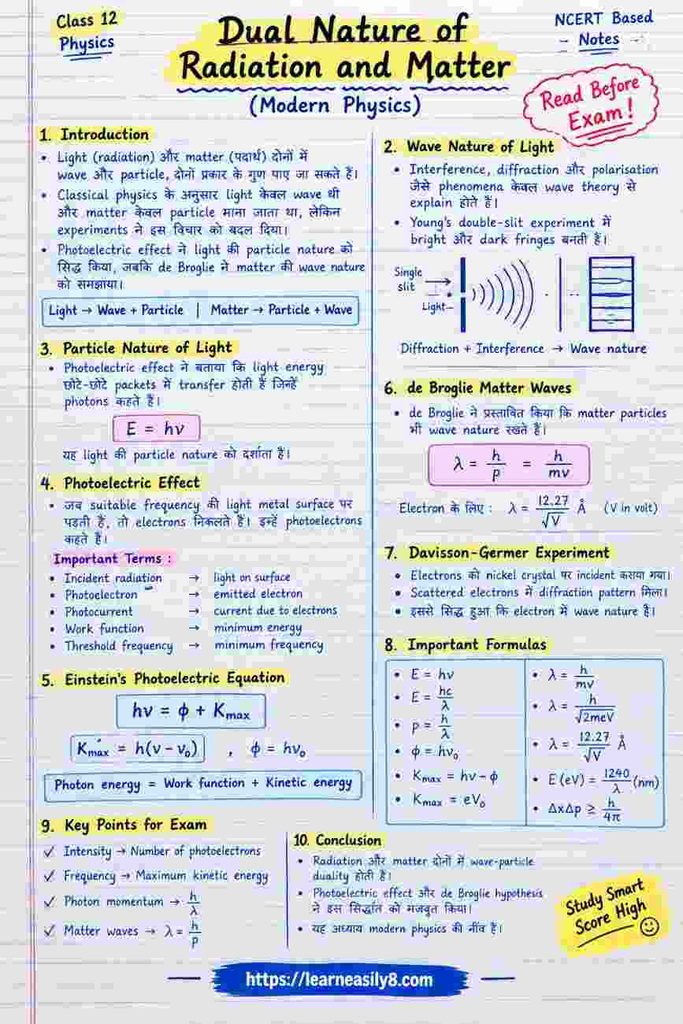
Dual Nature of Radiation and Matter Class 12 Physics का एक महत्वपूर्ण chapter है। इसमें हम समझते हैं कि light (radiation) और matter (द्रव्य) दोनों में particle और wave, दोनों प्रकार के गुण पाए जा सकते हैं। Classical Physics के अनुसार light केवल wave थी और matter केवल particle माना जाता था, लेकिन experiments ने इस विचार को बदल दिया। Photoelectric Effect ने light की particle nature को सिद्ध किया, जबकि de Broglie hypothesis ने matter की wave nature को समझाया।
- Light → Wave nature + Particle nature
- Matter → Particle nature + Wave nature
- Photon → Light का particle
- Electron → Matter particle जिसका wave nature भी होता है।
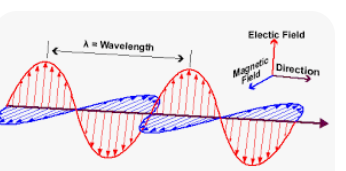
Wave Nature of Light – प्रकाश की तरंग प्रकृति
Light के wave nature को कई experiments से समझाया गया है। Interference, diffraction और polarisation जैसे phenomena केवल wave theory से अच्छी तरह explain होते हैं। Young’s double-slit experiment में light waves के superposition के कारण bright और dark fringes बनती हैं। इससे पता चलता है कि light में wave nature मौजूद है।
Important phenomena:
- Interference → प्रकाश तरंगों का superposition।
- Diffraction → obstacle/slit के किनारों से waves का फैलना।
- Polarisation → light के transverse wave nature को दर्शाता है।
- Wave theory frequency और wavelength को explain करती है।
Particle Nature of Light – प्रकाश की कण प्रकृति
कुछ phenomena ऐसे थे जिन्हें classical wave theory explain नहीं कर सकी। Photoelectric effect ने बताया कि light energy continuous रूप में नहीं बल्कि छोटे energy packets में transfer होती है। इन energy packets को photons (फोटॉन) कहा जाता है।
प्रत्येक photon की energy होती है:
जहाँ,
- = photon energy
- = Planck’s constant
- = frequency of radiation
इस प्रकार light को photon के रूप में particle nature वाला माना जाता है।
Photoelectric Effect – प्रकाश विद्युत प्रभाव
जब किसी suitable metal surface पर पर्याप्त frequency की electromagnetic radiation डाली जाती है, तो metal की surface से electrons निकलने लगते हैं। इस phenomenon को Photoelectric Effect कहते हैं और निकलने वाले electrons को photoelectrons कहा जाता है।
Example:
यदि suitable frequency की light को potassium या caesium जैसे metal पर डाला जाए, तो electrons surface से बाहर निकल सकते हैं।
मुख्य शब्द
- Incident radiation → surface पर पड़ने वाली light
- Photoelectron → emitted electron
- Photocurrent → photoelectrons के कारण प्राप्त current
- Work function → electron निकालने के लिए minimum energy
- Threshold frequency → photoelectric emission के लिए minimum frequency
Experimental Arrangement of Photoelectric Effect
Photoelectric effect को study करने के लिए सामान्यतः एक evacuated tube में two electrodes लगाए जाते हैं।
- Emitter/Photosensitive plate: जिस metal surface पर light डाली जाती है।
- Collector: emitted electrons को collect करता है।
- Battery: electrodes के बीच potential difference देती है।
- Ammeter: photoelectric current measure करता है।
- Voltmeter: applied potential difference measure करता है।
- Suitable frequency की light emitter पर incident कराई जाती है।
जब electrons emitter से निकलकर collector तक पहुँचते हैं, तो circuit में photoelectric current उत्पन्न होता है।
Read More: Bihar Board Class 12 Physics Chapter-wise Marks Distribution 2027
Laws of Photoelectric Effect
Photoelectric effect के experimental observations को कुछ important laws के रूप में लिखा जाता है। ये observations बाद में Einstein’s photoelectric equation द्वारा explain किए गए।
1. Threshold Frequency
हर metal के लिए एक minimum frequency होती है, जिसे threshold frequency ν0\nu_0 कहते हैं। यदि incident light की frequency इससे कम है, तो कितनी भी intensity की light क्यों न हो, photoelectric emission नहीं होता।
लेकिन यदि:
तो photoelectric emission संभव है।
2. Instantaneous Photoelectric Emission
यदि incident radiation की frequency threshold frequency से अधिक है, तो photoelectrons लगभग तुरंत emit हो जाते हैं।
Classical wave theory के अनुसार electron को energy collect करने में कुछ समय लगना चाहिए था। लेकिन experiment में measurable time delay नहीं पाया गया।
Conclusion: Light energy photons के रूप में electron को transfer करती है।
3. Effect of Intensity
यदि frequency threshold frequency से अधिक है, तो incident light की intensity बढ़ाने पर photoelectric current बढ़ता है।
अर्थात:
जिससे अधिक electrons emit होते हैं और photoelectric current बढ़ जाता है।
Important: Intensity बढ़ाने से maximum kinetic energy नहीं बढ़ती, यदि frequency constant है।
4. Effect of Frequency
Incident radiation की frequency बढ़ाने पर emitted photoelectrons की maximum kinetic energy बढ़ती है।
इसलिए:
जहाँ metal का work function है।
Work Function – कार्य फलन
किसी metal surface से electron को बाहर निकालने के लिए आवश्यक minimum energy को उस metal का work function कहते हैं।
इसे से denote किया जाता है।
जहाँ:
- = work function
- = Planck’s constant
- = threshold frequency
यदि incident photon की energy work function से कम है:
तो electron बाहर नहीं निकलता।
Work Function की Units
SI unit:
Practical Physics में इसे अक्सर electron volt (eV) में भी express किया जाता है।
Threshold Frequency
वह minimum frequency जिसके ऊपर incident light किसी particular metal से photoelectrons emit कर सकती है, threshold frequency कहलाती है।
इसे से denote करते हैं।
इससे:
यदि frequency threshold frequency से कम हो, तो emission नहीं होगा।
Threshold Wavelength
Threshold wavelength के लिए:
इसलिए:
Einstein’s Explanation of Photoelectric Effect
Einstein ने 1905 में Planck’s quantum concept का उपयोग करके photoelectric effect को explain किया।
उनके अनुसार:
- Light photons के रूप में travel करती है।
- प्रत्येक photon की energy होती है।
- एक photon अपनी पूरी energy एक electron को transfer कर सकता है।
- Energy का कुछ भाग electron को metal surface से बाहर निकालने में खर्च होता है।
- बाकी energy photoelectron की kinetic energy बनती है।
इससे photoelectric effect के सभी important observations explain हो जाते हैं।
Einstein’s Photoelectric Equation
जब photon metal surface के electron से interact करता है, तो energy conservation के अनुसार:
जहाँ:
- = incident photon energy
- = work function
- = maximum kinetic energy of photoelectron
क्योंकि:
इसलिए:
या:
Maximum Kinetic Energy of Photoelectron
Photoelectron की maximum kinetic energy:
Einstein equation से:
इसलिए frequency बढ़ाने पर बढ़ती है।
ध्यान दें: सभी emitted electrons की kinetic energy समान नहीं होती। Surface से अलग-अलग depths पर मौजूद electrons अलग energy के साथ बाहर आ सकते हैं। सबसे अधिक kinetic energy को दर्शाता है।
Stopping Potential
Photoelectric experiment में collector और emitter के बीच reverse potential लगाने पर photoelectric current कम होता जाता है। एक particular reverse potential पर current zero हो जाता है। इस potential को stopping potential V0V_0 कहते हैं।
Maximum kinetic energy और stopping potential के बीच:
Einstein equation:
अतः:
और:
Photoelectric Current and Intensity
Photoelectric current मुख्यतः emitted photoelectrons की संख्या पर depend करता है।
यदि frequency constant और threshold से अधिक है:
इसलिए:
लेकिन maximum kinetic energy frequency पर depend करती है, intensity पर नहीं।
Read Also: Electrostatics Class 12 Short Notes for JEE in Hindi | Formula, Concepts & Revision
Important Difference: Intensity vs Frequency
यह distinction board exams में बहुत important है।
| Intensity बढ़ाने पर | Frequency बढ़ाने पर |
|---|---|
| Photons की संख्या बढ़ती है | प्रत्येक photon की energy बढ़ती है |
| Photoelectric current बढ़ता है | Maximum kinetic energy बढ़ती है |
| अधिक electrons emit होते हैं | Photoelectron की maximum speed बढ़ती है |
| नहीं बदलती | बढ़ती है |
| नहीं बदलता | बढ़ता है |
Exam Trick:
Intensity → Number of electrons
Frequency → Energy of electrons
Photon – प्रकाश का कण
Photon electromagnetic radiation का एक quantum या energy packet है।
Photon की energy:
और:
इसलिए:
Photon की मुख्य properties
- Photon की rest mass zero होती है।
- Vacuum में photon speed से travel करता है।
- Photon electric charge-less होता है।
- Photon की energy frequency पर depend करती है।
- Frequency अधिक → photon energy अधिक।
- Wavelength अधिक → photon energy कम।
Momentum of Photon
Photon का rest mass zero होता है, फिर भी photon momentum रखता है।
Photon momentum:
क्योंकि:
और relativistic relation से:
इसलिए:
यह photon के particle nature का महत्वपूर्ण evidence है।
Photon Energy in Electron Volt
यदि photon की wavelength nm में दी गई हो, तो photon energy को eV में जल्दी calculate किया जा सकता है:
उदाहरण:
यदि:
तो:
अतः photon energy:
Failure of Classical Wave Theory
Classical wave theory photoelectric effect के कुछ important observations को explain नहीं कर सकी।
मुख्य समस्याएँ:
- Threshold frequency:
Classical theory के अनुसार पर्याप्त intensity की light किसी भी frequency पर electrons निकाल सकती थी, लेकिन experiment में ऐसा नहीं हुआ। - Instantaneous emission:
Electron तुरंत emit होता है, जबकि classical theory में energy accumulation में time लगना चाहिए था। - Frequency dependence:
Maximum kinetic energy frequency पर depend करती है, intensity पर नहीं। - Intensity dependence:
Intensity बढ़ने पर photoelectric current बढ़ता है।
इन observations को Einstein की photon theory ने successfully explain किया।
Matter Waves – Matter की तरंग प्रकृति
de Broglie ने 1924 में प्रस्तावित किया कि केवल radiation ही wave-particle duality नहीं दिखाती, बल्कि matter particles भी wave nature रखते हैं।
उनके अनुसार किसी moving particle से एक wave associated होती है, जिसे matter wave या de Broglie wave कहते हैं।
Matter wave की wavelength:
और क्योंकि:
तो:
de Broglie Hypothesis
de Broglie ने photon के relation को matter particles के लिए extend किया।
Photon के लिए:
इससे:
यदि particle का momentum , तो:
इस wavelength को de Broglie wavelength कहते हैं।
Important Point
Particle का momentum जितना अधिक होगा, उसकी de Broglie wavelength उतनी कम होगी।
de Broglie Wavelength of an Electron
यदि electron velocity से moving है:
जहाँ:
यदि electron को potential difference से accelerate किया गया है, तो:
इससे de Broglie wavelength:
Electron के लिए commonly used form:
जहाँ volt में है।
Davisson-Germer Experiment
Davisson-Germer experiment ने experimentally electron के wave nature को demonstrate किया।
इस experiment में electrons को accelerated करके nickel crystal पर incident कराया गया। Scattered electrons की intensity को अलग-अलग angles पर measure किया गया।
एक particular angle पर strong intensity maximum प्राप्त हुआ, जो diffraction pattern के कारण था।
Diffraction एक wave phenomenon है। इसलिए इस experiment ने prove किया कि electrons में wave nature मौजूद है।
Conclusion
और experimentally de Broglie wavelength को support किया गया।
Wave-Particle Duality
Wave-particle duality का अर्थ है कि microscopic objects में wave और particle दोनों प्रकार के properties दिखाई दे सकते हैं।
Radiation
- Interference → wave nature
- Diffraction → wave nature
- Photoelectric effect → particle nature
- Compton effect → particle nature
Matter
- Electron → particle nature
- Electron diffraction → wave nature
- de Broglie hypothesis → matter waves
इस प्रकार:
Matter Waves की विशेषताएँ
de Broglie waves की कुछ important properties:
- प्रत्येक moving particle से matter wave associated होती है।
- Wavelength momentum के inversely proportional है।
- Matter wave की wavelength:
- भारी macroscopic objects की wavelength बहुत छोटी होती है।
- Electron जैसे microscopic particles के लिए wavelength measurable हो सकती है।
- Matter waves electromagnetic waves नहीं होतीं।
- Matter wave का concept quantum mechanics की foundation में महत्वपूर्ण है।
Group Velocity and Phase Velocity
Matter waves के context में phase velocity और group velocity का concept आता है।
Phase velocity:
de Broglie matter wave के लिए:
जहाँ particle की velocity है।
Group velocity:
अर्थात matter wave का group velocity particle की velocity के बराबर होता है। Particle की physical motion को wave packet के group velocity से associate किया जाता है।
Heisenberg Uncertainty Principle – संक्षिप्त परिचय
Dual nature और quantum behaviour को समझने में Heisenberg Uncertainty Principle महत्वपूर्ण है।
इसके अनुसार किसी microscopic particle की position और momentum को एक साथ unlimited accuracy से determine नहीं किया जा सकता।
इसका अर्थ यह नहीं है कि instruments खराब हैं, बल्कि quantum particles की fundamental nature ही ऐसी है।
यह microscopic world और classical physics के बीच महत्वपूर्ण difference को दर्शाता है।
Important Formula Sheet
इस chapter के सभी important formulas revision के लिए:
Photon Energy
Frequency-Wavelength Relation
Photon Energy
Photon Momentum
Work Function
Einstein Photoelectric Equation
Maximum Kinetic Energy
Kinetic Energy
Stopping Potential
de Broglie Wavelength
Electron Accelerated Through Potential
Electron Wavelength
Important Constants
Numericals solve करते समय ये constants useful हैं:
- Planck constant:
- Speed of light:
- Electron charge:
- Electron mass:
- :
Important NCERT-Based Conceptual Questions
Q1. What is photoelectric effect?
जब suitable frequency की electromagnetic radiation metal surface पर पड़ने से electrons emit होते हैं, तो इस phenomenon को photoelectric effect कहते हैं।
Q2. What is work function?
Metal surface से electron निकालने के लिए आवश्यक minimum energy को work function कहते हैं।
Q3. What is threshold frequency?
किसी metal से photoelectric emission शुरू करने के लिए आवश्यक minimum frequency को threshold frequency कहते हैं।
Q4. What happens when intensity is increased?
यदि frequency threshold से अधिक है, तो intensity बढ़ाने पर photoelectric current बढ़ता है, लेकिन maximum kinetic energy नहीं बढ़ती।
Q5. What happens when frequency is increased?
Frequency बढ़ाने पर photon energy बढ़ती है और इसलिए photoelectrons की maximum kinetic energy तथा stopping potential बढ़ते हैं।
Board Exam में पूछे जाने वाले Important Differences
Photoelectric Effect vs de Broglie Matter Waves
| Photoelectric Effect | de Broglie Matter Waves |
|---|---|
| Light की particle nature बताता है | Matter की wave nature बताता है |
| Photon electrons को energy देता है | Moving particle से wave associated होती है |
| Einstein equation से explain होता है | de Broglie relation से explain होता है |
| महत्वपूर्ण है | महत्वपूर्ण है |
Solved Numerical – Photoelectric Effect
Question: किसी metal की work function है। यदि उस पर energy का photon incident होता है, तो maximum kinetic energy ज्ञात करें।
Solution
Einstein equation:
Given:
Therefore:
अतः emitted photoelectron की maximum kinetic energy 3 eV होगी।
Solved Numerical – Stopping Potential
Question: Photoelectrons की maximum kinetic energy है। Stopping potential ज्ञात करें।
हम जानते हैं:
यदि kinetic energy है, तो electron को रोकने के लिए stopping potential:
अर्थात stopping potential 2 volt होगा।
Solved Numerical – de Broglie Wavelength
यदि किसी particle का momentum दिया गया हो, तो उसकी de Broglie wavelength सीधे:
से निकाली जाती है।
मान लीजिए:
और:
तब:
Quick Revision – One Line Points
- Light has wave as well as particle nature.
- Photon is a quantum of electromagnetic radiation.
- Photon energy:
- Photon momentum:
- Photoelectric effect proves particle nature of light.
- Einstein explained photoelectric effect using photon theory.
- Work function:
- Threshold frequency is minimum frequency required for photoemission.
- Intensity controls the number of emitted photoelectrons.
- Frequency controls maximum kinetic energy.
- Stopping potential:
- de Broglie proposed wave nature of matter.
- Matter-wave wavelength:
- Davisson-Germer experiment confirmed electron diffraction.
- Hence electrons possess wave nature.
Exam Tricks – याद रखने के आसान तरीके
Trick 1: Intensity और Frequency
I → Increase in number
Intensity बढ़ाओ → Number of photoelectrons बढ़ेगा।
Frequency → Energy
Frequency बढ़ाओ → Electron की maximum energy बढ़ेगी।
Trick 2: de Broglie
Momentum ज्यादा → Wavelength कम
Momentum कम → Wavelength ज्यादा
Trick 3: Photoelectric Equation
याद रखें:
अर्थात:
Chapter Summary
Dual Nature of Radiation and Matter Modern Physics का अत्यंत महत्वपूर्ण chapter है। इसमें light और matter दोनों की dual nature को समझाया जाता है। Photoelectric effect ने light की particle nature को establish किया और Einstein ने इसे photon concept से explain किया। दूसरी ओर, de Broglie ने matter particles के लिए wave nature प्रस्तावित किया। Davisson-Germer experiment ने electron diffraction द्वारा इस hypothesis को experimentally support किया। इसलिए quantum level पर radiation और matter दोनों में wave-particle duality दिखाई देती है।
Most Important Formulas for Board Exam
Board Exam Focus: Photoelectric effect के laws, Einstein photoelectric equation की derivation, stopping potential, work function, threshold frequency, photon momentum, de Broglie wavelength और Davisson-Germer experiment को विशेष रूप से तैयार करें।