

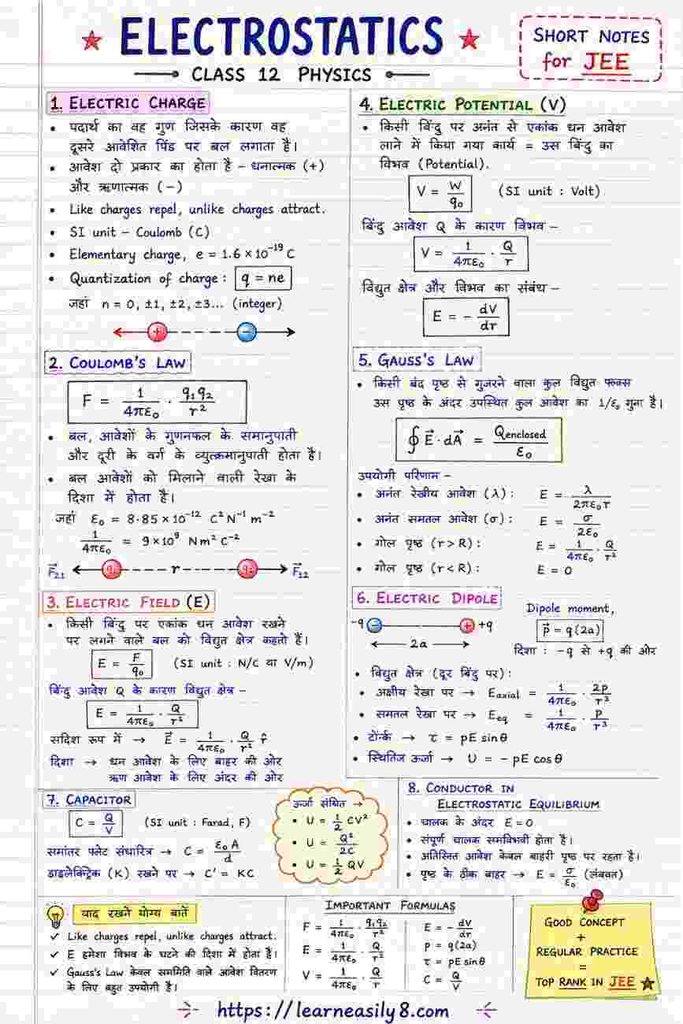
अगर आप Class 12 Physics Electrostatics Short Notes for JEE की तैयारी कर रहे हैं और कम समय में पूरे chapter को revise करना चाहते हैं, तो ये notes आपके लिए बहुत उपयोगी हैं। Electrostatics JEE Physics का एक महत्वपूर्ण chapter है, जिसमें Electric Charge, Coulomb’s Law, Electric Field, Electric Potential, Electric Dipole, Gauss’s Law, Capacitor, Dielectric और Electrostatic Energy जैसे महत्वपूर्ण concepts शामिल हैं।
इस पोस्ट में सभी topics को Hindi + English में आसान और सरल भाषा में समझाया गया है, ताकि students concepts को जल्दी समझकर numerical problems आसानी से solve कर सकें। साथ ही इसमें important formulas, key concepts, quick revision points और JEE-focused tricks दिए गए हैं। ये short notes JEE Main और JEE Advanced दोनों की तैयारी के दौरान last-minute revision के लिए helpful हैं। अगर आप Electrostatics के formulas और concepts को एक जगह से revise करना चाहते हैं, तो इस complete notes को जरूर पढ़ें। Download NCERT BOOK PDF.
Electrostatics Class 12 Short Notes for JEE: Formula, Concepts & Revision
Electrostatics यानी विद्युतस्थैतिकी Physics का वह भाग है जिसमें स्थिर electric charges और उनके कारण उत्पन्न electric force, electric field, electric potential, capacitance और energy का अध्ययन किया जाता है। JEE में इस chapter से conceptual questions, numerical problems और formula-based questions नियमित रूप से पूछे जाते हैं। नीचे दिए गए notes को quick revision + JEE preparation को ध्यान में रखकर simple Hindi + English language में तैयार किया गया है।
Electric Charge – विद्युत आवेश
Electric charge पदार्थ का वह गुण है जिसके कारण वह दूसरे charged body पर electric force लगाता है। Charge दो प्रकार का होता है—Positive (+) और Negative (−)। समान charges एक-दूसरे को repel और opposite charges attract करते हैं। Charge का SI unit Coulomb (C) है। Charge एक scalar quantity है, लेकिन इसका algebraic sign महत्वपूर्ण होता है। JEE में charge conservation और quantization पर conceptual questions बहुत महत्वपूर्ण हैं।
- Like charges → Repulsion
- Unlike charges → Attraction
- SI unit → Coulomb (C)
- Elementary charge: e = 1.6 × 10⁻¹⁹ C
- Electron charge = −e
- Proton charge = +e
Quantization of Charge
Electric charge हमेशा elementary charge के integral multiple के रूप में पाया जाता है। इसलिए किसी isolated body का charge मनमाने ढंग से नहीं बदल सकता। इसका mathematical expression q = ne है, जहाँ n कोई integer है और e elementary charge है। Macroscopic objects में charge बहुत अधिक particles का combined effect होता है। JEE numerical में n निकालने के लिए q/e का उपयोग किया जाता है और n हमेशा integer होना चाहिए।
Formula:जहाँ
n = 0, ±1, ±2, ±3…
Conservation of Charge – आवेश संरक्षण
Charge conservation का अर्थ है कि किसी isolated system में total electric charge हमेशा constant रहता है। Charge न तो create किया जा सकता है और न ही destroy; यह केवल एक body से दूसरी body में transfer होता है। उदाहरण के लिए friction द्वारा charging में electrons एक object से दूसरे object में चले जाते हैं। JEE में system के initial और final total charge को बराबर रखकर problems आसानी से solve की जा सकती हैं।
याद रखें: Charge transfer होता है, charge का total amount isolated system में conserved रहता है।
Coulomb’s Law – कूलॉम का नियम
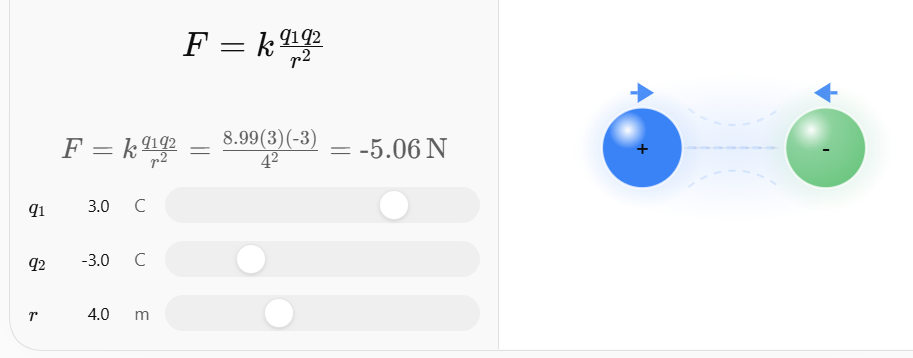
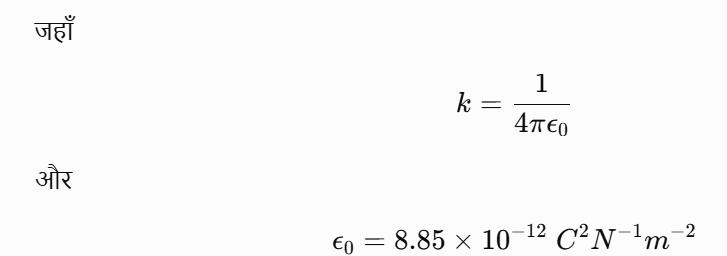
दो point charges के बीच electrostatic force उनके charges के product के directly proportional और उनके बीच की दूरी के square के inversely proportional होता है। Force की direction दोनों charges को जोड़ने वाली straight line के along होती है। Vacuum में इसका constant लगभग Nm²/C² होता है। यह law JEE Electrostatics का सबसे fundamental formula है और कई advanced problems इसी principle पर आधारित होती हैं।
Principle of Superposition – अध्यारोपण सिद्धांत
जब किसी charge पर कई charges electric force लगाते हैं, तो net force प्रत्येक individual force का vector sum होता है। हर pair के लिए Coulomb’s law independently apply किया जाता है और फिर सभी forces को vectorially add किया जाता है। केवल magnitudes जोड़ना तभी सही है जब सभी forces एक ही direction में हों। JEE में multiple-charge arrangement, triangle और square configuration के questions में superposition principle बहुत उपयोगी है।
Important: Force vector quantity है, इसलिए direction का ध्यान रखें।
Electric Field – विद्युत क्षेत्र
किसी charged body के आसपास का वह region जहाँ कोई test charge electric force experience करता है, electric field कहलाता है। किसी point पर electric field को उस point पर रखे गए unit positive test charge पर लगने वाले force के रूप में define किया जाता है। Electric field एक vector quantity है। Positive charge के कारण field outward और negative charge के कारण inward direction में होता है।SI unit:या V/m
Electric Field Due to Point Charge
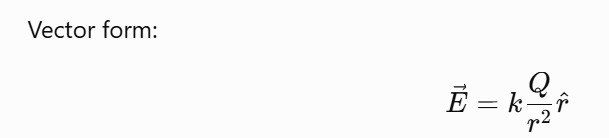
एक isolated point charge से दूरी पर electric field का magnitude charge के magnitude के directly proportional और distance के square के inversely proportional होता है। Positive source charge से field radial outward तथा negative source charge से radial inward होता है। यदि medium vacuum के बजाय dielectric हो, तो permittivity के कारण field की magnitude कम हो जाती है। JEE में point charge electric field का superposition के साथ बहुत उपयोग होता है।
Electric Field Lines – विद्युत क्षेत्र रेखाएँ
Electric field lines imaginary lines हैं जिनकी किसी point पर tangent उस point पर electric field की direction बताती है। ये lines positive charge से बाहर निकलती हैं और negative charge पर समाप्त होती हैं। दो electric field lines कभी intersect नहीं करतीं, क्योंकि intersection पर field की दो directions हो जाएँगी। जहाँ lines अधिक closely spaced होती हैं वहाँ electric field अधिक strong होता है। Field lines का pattern charge distribution की symmetry समझने में बहुत उपयोगी है।
Properties:
- Positive से निकलती हैं।
- Negative पर समाप्त होती हैं।
- कभी intersect नहीं करतीं।
- Conducting surface पर field lines normal होती हैं।
- Lines की density field strength को indicate करती है।
Electric Dipole – विद्युत द्विध्रुव
Electric dipole दो equal और opposite charges तथा का system है, जिनके बीच छोटी दूरी होती है। Dipole की strength को electric dipole moment कहते हैं। इसकी direction negative charge से positive charge की ओर होती है। Dipole JEE में electric field, potential, torque और rotational equilibrium के questions के लिए अत्यंत महत्वपूर्ण है। Dipole moment एक vector quantity है और इसका SI unit Coulomb-metre होता है।
जहाँ दोनों charges के बीच distance है।
Direction: −q→+q
Electric Field of Dipole
Dipole के कारण electric field की magnitude और direction point की position पर निर्भर करती है। दो important positions हैं—axial position और equatorial position। Axial line dipole की axis के along होती है, जबकि equatorial line dipole के midpoint से perpendicular होती है। JEE में short-distance approximation के लिए का उपयोग किया जाता है। Far point पर dipole field distance के cube के inverse proportional होती है।
Far axial point:
Far equatorial point:अतः Eaxial = 2Eequatorial
Electric Potential – विद्युत विभव
किसी point पर electric potential वह work done per unit positive test charge है जो उसे infinity से उस point तक धीरे-धीरे लाने में किया जाता है। Potential scalar quantity है, इसलिए multiple charges के potential को algebraically add किया जा सकता है। Electric potential का SI unit Volt (V) है। Point charge के कारण potential charge के directly proportional और distance के inversely proportional होता है।
Point charge के लिए:
Important: Electric field vector है, लेकिन electric potential scalar है।
Potential Difference – विभवांतर
दो points के बीच potential difference उस work done per unit charge को represent करता है जो charge को एक point से दूसरे point तक move करने में associated होता है। Potential difference electric field और charge motion के बीच relationship समझने में महत्वपूर्ण है। यदि electric field के opposite direction में positive charge move किया जाए, तो potential increase होता है। Electrostatics में potential difference को line integral के द्वारा electric field से relate किया जाता है।
Uniform field में:
जब displacement field की direction में हो।
Relation Between Electric Field and Potential
Electric field और electric potential closely related quantities हैं। Electric field हमेशा potential के decreasing direction में होता है। इसलिए electric field की direction में जाने पर potential घटता है। One-dimensional case में electric field potential के spatial rate of change के negative के बराबर होता है। JEE में graph-based questions में relation बहुत महत्वपूर्ण है।
या one-dimensional case:
याद रखें: Greater slope of V-x graph → greater magnitude of E.
Equipotential Surface – समविभव पृष्ठ
ऐसा surface जिसके प्रत्येक point पर electric potential समान होता है, equipotential surface कहलाता है। इस surface पर charge को move कराने में electrostatic work done zero होता है क्योंकि potential difference zero होता है। Electric field हमेशा equipotential surface के perpendicular होता है। Point charge के लिए equipotential surfaces concentric spherical surfaces होती हैं। Uniform electric field में ये parallel planes होती हैं।
Important points:
- constant
- Work done = 0
- equipotential surface
- Equipotential surfaces कभी intersect नहीं करतीं।
Electric Flux – विद्युत फ्लक्स
Electric flux किसी surface से गुजरने वाले electric field की effective strength को represent करता है। Uniform electric field में flux field magnitude, surface area और field तथा area vector के बीच angle पर depend करता है। Flux scalar quantity है। यदि field surface के perpendicular है, flux maximum होता है; यदि field surface के parallel है, flux zero होता है। इसका SI unit N·m²/C है।
जहाँ electric field और area vector के बीच angle है।
Gauss’s Law – गॉस का नियम
Gauss’s law के अनुसार किसी closed surface से निकलने वाला total electric flux उस surface के अंदर enclosed total charge के गुना के बराबर होता है। यह law विशेष रूप से highly symmetric charge distributions के electric field को निकालने में बहुत powerful है। Spherical, cylindrical और planar symmetry वाले problems में suitable Gaussian surface choose करना JEE के लिए key skill है।
Golden Rule: केवल closed surface के अंदर का net charge flux determine करता है।
Applications of Gauss’s Law
Gauss’s law का direct application केवल तब आसान होता है जब charge distribution में पर्याप्त symmetry हो। Spherical symmetry में spherical Gaussian surface, cylindrical symmetry में cylindrical surface और infinite plane में pillbox-type Gaussian surface चुनी जाती है। सही Gaussian surface ऐसी होनी चाहिए जहाँ electric field का magnitude symmetry के कारण आसानी से constant या predictable हो। JEE में Gaussian surface की selection numerical से अधिक conceptual point हो सकती है।
Common results:
- Infinite line charge →
- Infinite sheet → constant
- Point/spherical charge → E∝1/r2
Electric Field Due to Infinite Line Charge
एक infinitely long straight charged wire की linear charge density है। Symmetry के कारण wire से समान दूरी पर electric field का magnitude समान होता है। Gaussian surface के रूप में coaxial cylinder लिया जाता है। Cylindrical surface से flux निकलता है, जबकि end caps से flux zero होता है क्योंकि electric field radial direction में होता है। JEE में line charge और two-wire configurations में यह result frequently useful है।
जहाँ है।
Direction: Positive line charge से outward.
Electric Field Due to Infinite Plane Sheet
एक uniformly charged infinite plane sheet की surface charge density हो तो उसके दोनों sides पर electric field की magnitude समान होती है। Field sheet के perpendicular होता है। Gaussian surface के रूप में छोटा cylindrical pillbox लिया जाता है। Infinite sheet के लिए electric field distance पर depend नहीं करता, इसलिए constant रहता है। यह result conductor और non-conductor sheet के questions में अलग-अलग तरीके से apply होता है।
For non-conducting infinite sheet:
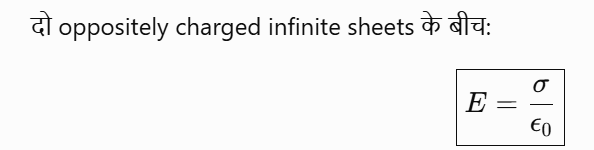
Electric Field Due to Spherical Shell
Uniformly charged spherical shell के लिए Gauss’s law का उपयोग करके तीन regions को समझना चाहिए। Shell के बाहर field ऐसा behave करता है जैसे पूरा charge center पर concentrated हो। Shell के अंदर enclosed charge zero होता है, इसलिए electrostatic field zero होता है। Surface पर field का value पर बाहर और अंदर के results से determine होता है। JEE में shell के अंदर और बाहर potential/field का comparison बहुत common है।
For :
For :
Conductors in Electrostatic Equilibrium
Electrostatic equilibrium में conductor के अंदर electric field zero होता है। यदि field non-zero होता, तो free electrons move करते रहते और equilibrium नहीं बनता। इसलिए excess charge conductor की outer surface पर रहता है। Conductor की पूरी body equipotential होती है। Surface के ठीक बाहर electric field conductor की surface के normal direction में होता है। JEE में conductor, cavity और charge distribution के questions के लिए ये properties याद रखना आवश्यक है।
Key results:
Electric field surface के perpendicular होता है।
Electrostatic Potential Energy
Electric potential energy किसी system of charges की configuration के कारण stored energy है। दो point charges के लिए potential energy charge product के directly proportional और separation के inversely proportional होती है। Same sign charges के लिए energy positive और opposite sign charges के लिए negative होती है। Multiple-charge system में हर unique pair की interaction energy को add किया जाता है। JEE में sign convention विशेष रूप से महत्वपूर्ण है।
Two charges:
Multiple charges:
Potential Energy of Electric Dipole
External electric field में electric dipole की potential energy उसके dipole moment और electric field के relative orientation पर depend करती है। जब dipole field के parallel होता है, energy minimum होती है और system stable equilibrium में होता है। Anti-parallel orientation में energy maximum होती है और equilibrium unstable होता है। यह concept torque और rotational equilibrium के साथ JEE में frequently पूछा जाता है।
Stable:
Unstable:
Torque on Electric Dipole
Uniform electric field में electric dipole पर equal and opposite forces लगते हैं। Net force zero हो सकता है, लेकिन ये forces एक couple बनाते हैं जो dipole को rotate करने की tendency देता है। इस rotational effect को torque कहते हैं। Torque maximum तब होता है जब dipole और field perpendicular हों। Torque zero होने पर dipole equilibrium में हो सकता है, लेकिन stability angle पर depend करती है।
Vector form:
Maximum torque:
Capacitance – धारिता
Capacitance किसी conductor या capacitor की charge storing ability को measure करता है। यह stored charge और potential difference के ratio के बराबर होता है। Capacitance केवल conductor geometry और surrounding medium पर depend करती है; ideal capacitor में charge या potential difference के individual values पर directly depend नहीं करती। SI unit Farad (F) है। Practical capacitors अक्सर microfarad, nanofarad और picofarad range में होते हैं।
SI unit:
Parallel Plate Capacitor
Parallel plate capacitor दो large conducting plates का arrangement है जिनके बीच distance और area होता है। यदि plates के बीच vacuum या air हो, तो capacitance area के directly proportional और plate separation के inversely proportional होती है। Plates को closer करने से capacitance बढ़ती है। Dielectric insert करने पर capacitance भी बढ़ती है। JEE में dielectric insertion और battery connected/disconnected cases बहुत important हैं।
With dielectric of relative permittivity :
Combination of Capacitors
Capacitors को मुख्यतः series और parallel में combine किया जाता है। Series combination में प्रत्येक capacitor पर same charge होता है, जबकि total potential difference individual voltage drops का sum होता है। Parallel combination में सभी capacitors पर same potential difference होता है और total charge individual charges का sum होता है। JEE circuit questions में equivalent capacitance निकालना सबसे basic और frequently tested concept है।
Series
Two capacitors:
Parallel
Energy Stored in Capacitor
Charged capacitor में electrostatic energy stored रहती है। यह energy capacitor को charge करने में किए गए work के रूप में समझी जा सकती है। Energy हमेशा positive होती है। तीन equivalent formulas useful हैं और problem की given quantities के अनुसार कोई भी formula choose किया जा सकता है। JEE numerical में capacitance, voltage, charge या energy में से किसी unknown को निकालने के लिए इन relations का उपयोग करें।
Also:
और
Energy Density of Electric Field
Electric field में energy केवल capacitor plates पर नहीं बल्कि ideal capacitor के बीच के electric field region में stored होती है। Energy per unit volume को energy density कहते हैं। Vacuum में इसका value electric field के square के proportional होता है। इसलिए electric field को double करने पर energy density four times हो जाती है। JEE में conceptual questions में relation काफी useful है।
Medium में:
जहाँ है।
Dielectric – परावैद्युत
Dielectric एक insulating material है जिसे capacitor plates के बीच रखा जा सकता है। External electric field के कारण dielectric molecules polarize होते हैं। इससे effective electric field कम हो जाता है और capacitor की capacitance बढ़ती है। Dielectric की relative permittivity को से denote किया जाता है। JEE में dielectric insertion के लिए यह देखना सबसे पहले जरूरी है कि capacitor battery से connected है या isolated।
और
Battery Connected vs Disconnected Capacitor
Dielectric insertion के questions में battery की condition सबसे important है। यदि battery connected है तो potential difference constant रहता है क्योंकि battery voltage maintain करती है। यदि capacitor isolated है, तो charge constant रहता है। इसके बाद capacitance में change के आधार पर energy, charge और electric field में changes निकाले जाते हैं। JEE में इसी concept पर multiple-step numerical problems बनती हैं।
Battery Connected:
Battery Disconnected:
इस distinction को हमेशा सबसे पहले identify करें।
Important Capacitor Changes with Dielectric
जब dielectric constant का slab पूरी तरह capacitor के बीच insert किया जाता है, capacitance times हो जाती है। लेकिन battery connected और disconnected condition में बाकी physical quantities अलग तरह से बदलती हैं। इसलिए केवल याद करना पर्याप्त नहीं है। , और को साथ में apply करें। यह JEE Main और Advanced दोनों के लिए high-value concept है।
Battery connected:
Battery disconnected:
Electrostatic Shielding
Electrostatic shielding का अर्थ है किसी region को external electric field से protect करना। Electrostatic equilibrium में conductor के अंदर electric field zero होता है, इसलिए conducting enclosure के अंदर external electrostatic field का effect नहीं पहुँचता। इसी principle का practical use sensitive electronic instruments और cables की protection में होता है। यदि conductor के अंदर cavity में charge मौजूद हो, तो situation अलग होगी और induced charges का analysis करना पड़ सकता है।
Core concept:
Reason: Free charges redistribute होकर internal field को cancel कर देते हैं।
JEE Electrostatics Formula Sheet – Quick Revision
| Concept | Important Formula |
|---|---|
| Coulomb Force | (F=k\frac{ |
| Electric Field | |
| Point Charge Field | |
| Point Charge Potential | |
| Potential Energy | |
| Dipole Moment | |
| Dipole Torque | |
| Dipole Energy | |
| Electric Flux | |
| Gauss Law | |
| Infinite Line Charge | |
| Infinite Sheet | |
| Capacitance | |
| Parallel Plate Capacitor | |
| Capacitor Energy | |
| Energy Density | |
| Dielectric Capacitance |
JEE के लिए Most Important Concepts
Electrostatics में केवल formulas याद करने के बजाय उनके physical meaning को समझना ज्यादा महत्वपूर्ण है। सबसे पहले Coulomb’s law, superposition, electric field और potential की fundamentals मजबूत करें। इसके बाद Gauss law के symmetry-based applications करें। फिर dipole, conductor, capacitance और dielectric पर numerical practice करें। JEE Advanced में vector direction, limiting cases, graphs और battery-connected/disconnected capacitor situations पर विशेष ध्यान दें।
- Coulomb’s Law
- Superposition Principle
- Electric Field
- Electric Potential
- Gauss Law
- Electric Dipole
- Conductors
- Capacitors
- Dielectric
- Capacitor Energy
Electrostatics में Common Mistakes
Students अक्सर electric field और electric potential को एक ही प्रकार की quantity समझ लेते हैं, जबकि field vector और potential scalar है। Coulomb force में distance का square भूलना भी common mistake है। Gauss law में enclosed charge और total charge को confuse नहीं करना चाहिए। Capacitor problems में battery connected या disconnected condition identify करना सबसे जरूरी है। Direction, sign convention और units की छोटी mistakes numerical answer को completely बदल सकती हैं।
Quick Check:
- → Vector
- → Scalar
- → Vector
- → Scalar
- → Vector
- Flux → Scalar
- Conducting body के अंदर electrostatic
Electrostatics JEE Preparation Strategy
पहले theory और basic formulas revise करें, फिर प्रत्येक formula पर simple numerical solve करें। इसके बाद mixed-concept problems करें जहाँ Coulomb law, superposition और vectors एक साथ आते हैं। Gauss law में symmetry पहचानने का अभ्यास करें। Capacitor में series-parallel networks और dielectric cases जरूर solve करें। अंत में JEE Main तथा JEE Advanced के previous-year questions लगाएँ। हर गलत question के लिए एक छोटा error notebook बनाना revision को बहुत effective बना सकता है।
Best sequence:
Concept → Formula → Basic Questions → PYQs → Mixed Problems → Revision
One-Minute Revision Trick
पूरे Electrostatics chapter को पाँच keywords में याद किया जा सकता है:
Charge → Field → Potential → Flux → Capacitor
- Charge creates Electric Field
- Field determines Force
- Field is related to Potential
- Flux is related to Electric Field
- Capacitor stores Charge + Energy
सबसे महत्वपूर्ण relations:
इन relations को समझ लेने पर Electrostatics के बहुत से JEE questions interconnected लगने लगते हैं।
Read More:
- Chemical Kinetics Class 12: Notes For Chapter 4 Chemical kinetics
- Electrochemistry for 12th: Notes for chapter 3 of chemistry 12
- Notes of solution for chemistry 12th chapter two
- P- Block elements of 12th Chemistry: Notes of P-block elements
- P- Block Elements Chemistry 12th: Notes of group 16
- P- Block Elements Chemistry 12th: Notes of group 17