
Introduction
In our daily lives, we often come across substances that taste sour (like lemon juice) or bitter (like baking soda). These differences are due to the presence of acids and bases. In this chapter, we will learn about acids, bases, indicators, neutralization, salts, and their applications in everyday life.
🍋 What Are Acids?
- Acids are substances that taste sour.
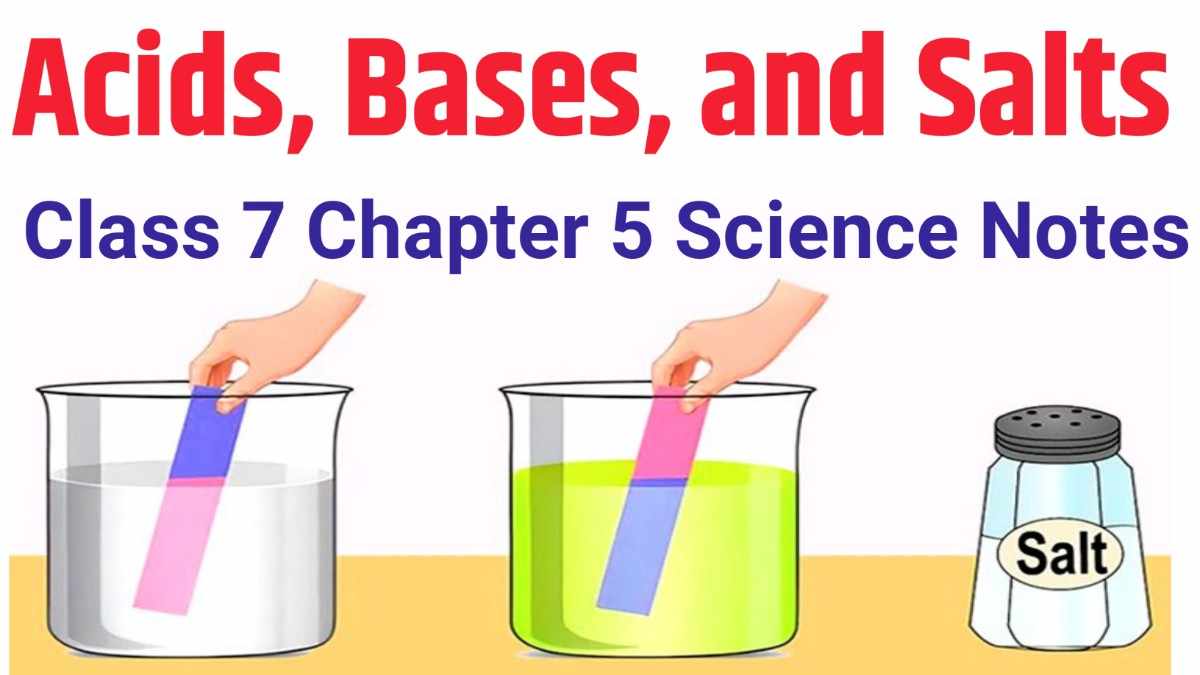
- They turn blue litmus red.
- Acids can be natural or mineral/chemical.
Examples of Natural Acids:
- Lemon → Citric acid
- Tamarind → Tartaric acid
- Tomato → Oxalic acid
- Curd → Lactic acid
Examples of Mineral (Strong) Acids:
- Hydrochloric Acid (HCl)
- Sulphuric Acid (H₂SO₄)
- Nitric Acid (HNO₃)
✅ Exam Tip: Strong acids are corrosive and can burn skin, while natural acids are generally weak.
🧂 What Are Bases?
- Bases are substances that taste bitter and feel soapy.
- They turn red litmus blue.
Examples of Bases:
- Baking soda (Sodium bicarbonate – NaHCO₃)
- Lime water (Calcium hydroxide – Ca(OH)₂)
- Soap (contains sodium/potassium hydroxide)
🎨 Indicators – Detecting Acids and Bases
Indicators are special substances that show different colors in acids and bases.
| Indicator | In Acidic Solution | In Basic Solution |
|---|---|---|
| Litmus | Blue → Red | Red → Blue |
| Turmeric | Yellow → No change | Yellow → Reddish brown |
| Phenolphthalein | Colorless | Pink |
| China Rose | Dark pink | Green |
✅ Exam Tip: Litmus is the most commonly used natural indicator.
⚖️ Neutralization Reaction
When an acid reacts with a base, both lose their properties and form salt and water. This process is called neutralization.
General Equation:
Acid + Base → Salt + Water
Example:
HCl + NaOH → NaCl + H₂O
🌍 Neutralization in Everyday Life
- Indigestion
- Excess acid in stomach causes pain.
- Treated with antacids (milk of magnesia – magnesium hydroxide).
- Ant Sting
- Ant injects formic acid.
- Relief by rubbing baking soda or soap solution (base).
- Soil Treatment
- Acidic soil → add lime (base).
- Basic soil → add organic matter.
- Factory Waste
- Wastes of factories may contain acids.
- Neutralized by adding bases before releasing into water bodies.
🧂 What Are Salts?
- Salts are formed after neutralization of an acid and a base.
- Examples:
- NaCl (Common Salt)
- Sodium carbonate (Washing soda)
- Sodium bicarbonate (Baking soda)
📊 Difference Between Acids, Bases, and Salts
| Property | Acids | Bases | Salts |
|---|---|---|---|
| Taste | Sour | Bitter, soapy | Varies (salty, neutral) |
| Litmus Test | Blue → Red | Red → Blue | Usually neutral |
| Examples | Lemon juice, HCl | Baking soda, NaOH | NaCl, Washing Soda |
| Uses | Preservatives, digestion | Cleaning, soap making | Cooking, industry |
🛡️ Safety with Acids and Bases
- Never taste or touch laboratory acids/bases.
- Always wear gloves and goggles while handling chemicals.
- Dilute acid by adding acid to water, never the reverse.
- Keep neutralizing agents (like baking soda) nearby in labs.
📚 Summary
- Acids are sour, turn blue litmus red.
- Bases are bitter and soapy, turn red litmus blue.
- Indicators help detect acids and bases.
- Neutralization → Acid + Base = Salt + Water.
- Salts are useful in food, industry, and daily life.
- Neutralization plays a vital role in indigestion, soil treatment, and insect stings.
❓ FAQs
Q1. Which acid is present in lemon?
Ans: Citric acid.
Q2. What is the normal use of baking soda?
Ans: As an antacid, in baking, and cleaning purposes.
Q3. What happens when an acid reacts with a base?
Ans: Neutralization takes place and forms salt and water.
Q4. Name one natural indicator.
Ans: Litmus, turmeric, or china rose.
Q5. Why should we not touch strong acids and bases?
Ans: They are corrosive and can damage skin.
📥 Download Free PDF
👉 Click Here to Download Acids, Bases, and Salts – Class 7 Science Notes (PDF)