
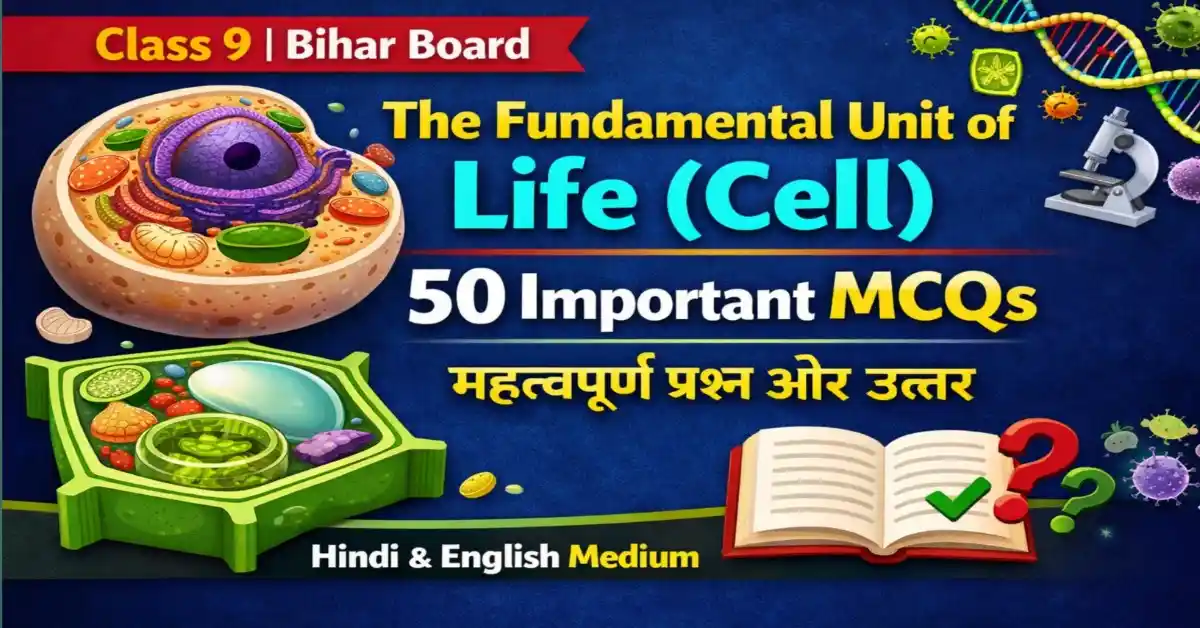
कक्षा 9 विज्ञान का अध्याय The Fundamental Unit of Life (Cell) बोर्ड परीक्षा की दृष्टि से बेहद महत्वपूर्ण है। इस अध्याय में छात्रों को कोशिका (Cell) की संरचना, कार्य, विभिन्न अंगकों (Cell Organelles) तथा उनके महत्व के बारे में विस्तार से जानकारी दी जाती है। बिहार बोर्ड परीक्षा में इस चैप्टर से अक्सर MCQs (बहुविकल्पीय प्रश्न) पूछे जाते हैं, जो आपके स्कोर को बढ़ाने में अहम भूमिका निभाते हैं।
इस पोस्ट में हमने 50 महत्वपूर्ण MCQs को Hindi + English माध्यम में तैयार किया है, ताकि छात्र आसानी से समझ सकें और परीक्षा में बेहतर प्रदर्शन कर सकें। सभी प्रश्न NCERT आधारित हैं और बोर्ड पैटर्न को ध्यान में रखकर बनाए गए हैं। यदि आप इस अध्याय की मजबूत तैयारी करना चाहते हैं, तो यह MCQ सेट आपके लिए बेहद उपयोगी साबित होगा।
Fundamental Unit of Life Class 9: 50 महत्वपूर्ण वस्तुनिष्ठ प्रश्न उत्तर सहित
1. Cell को सबसे पहले किस वैज्ञानिक ने खोजा? (Who discovered the cell first?)
A. Newton
B. Robert Hooke
C. Darwin
D. Einstein
Answer: Robert Hooke
2. Cell is the basic unit of life का क्या अर्थ है?
A. Cell सबसे बड़ा भाग है
B. Cell जीवन की सबसे छोटी इकाई है
C. Cell केवल पौधों में होता है
D. Cell केवल जानवरों में होता है
Answer: Cell जीवन की सबसे छोटी इकाई है
3. Prokaryotic cell में nucleus कैसा होता है?
A. Well-defined
B. Absent
C. Double
D. बड़ा
Answer: Absent
4. Eukaryotic cell में nucleus कैसा होता है?
A. Absent
B. Ill-defined
C. Well-defined
D. None
Answer: Well-defined
5. Cell membrane का मुख्य कार्य क्या है?
A. ऊर्जा बनाना
B. पदार्थों का आवागमन नियंत्रित करना
C. DNA बनाना
D. प्रोटीन बनाना
Answer: पदार्थों का आवागमन नियंत्रित करना
6. Plant cell में cell wall किससे बनी होती है?
A. Protein
B. Lipid
C. Cellulose
D. DNA
Answer: Cellulose
7. Cytoplasm कहाँ पाया जाता है?
A. Nucleus के अंदर
B. Cell membrane के बाहर
C. Cell membrane और nucleus के बीच
D. कहीं नहीं
Answer: Cell membrane और nucleus के बीच
8. Mitochondria को क्या कहा जाता है?
A. Brain of cell
B. Powerhouse of cell
C. Factory
D. Gate
Answer: Powerhouse of cell
9. Ribosome का कार्य क्या है?
A. Lipid synthesis
B. Protein synthesis
C. DNA replication
D. Respiration
Answer: Protein synthesis
10. Nucleus का मुख्य कार्य क्या है?
A. ऊर्जा बनाना
B. नियंत्रण करना
C. भोजन बनाना
D. पानी संग्रह करना
Answer: नियंत्रण करना
11. DNA कहाँ पाया जाता है?
A. Cytoplasm
B. Cell wall
C. Nucleus
D. Vacuole
Answer: Nucleus
12. Cell membrane किस प्रकार की होती है?
A. Permeable
B. Semi-permeable
C. Impermeable
D. Solid
Answer: Semi-permeable
Read More: Atoms and Molecules Class 9 MCQ | 50 Important Questions with Answers (Hindi + English)
13. Vacuole का कार्य क्या है?
A. Protein बनाना
B. Storage करना
C. Respiration
D. Control करना
Answer: Storage करना
14. Animal cell में cell wall होती है?
A. Yes
B. No
C. कभी-कभी
D. Always
Answer: No
15. Plant cell में vacuole का आकार कैसा होता है?
A. छोटा
B. बड़ा
C. नहीं होता
D. कई छोटे
Answer: बड़ा
16. Chloroplast कहाँ पाया जाता है?
A. Animal cell
B. Plant cell
C. Both
D. None
Answer: Plant cell
17. Chlorophyll का कार्य क्या है?
A. Respiration
B. Photosynthesis
C. Digestion
D. Excretion
Answer: Photosynthesis
18. Plasma membrane किससे बनी होती है?
A. Protein और lipid
B. DNA
C. RNA
D. Cellulose
Answer: Protein और lipid
19. Golgi apparatus का कार्य क्या है?
A. Packaging
B. Respiration
C. Digestion
D. Storage
Answer: Packaging
20. Lysosome को क्या कहा जाता है?
A. Suicide bag
B. Powerhouse
C. Brain
D. Wall
Answer: Suicide bag
21. Endoplasmic reticulum का कार्य क्या है?
A. Transport
B. Digestion
C. Respiration
D. Control
Answer: Transport
22. Smooth ER का कार्य क्या है?
A. Protein synthesis
B. Lipid synthesis
C. DNA synthesis
D. Energy
Answer: Lipid synthesis
23. Rough ER में क्या पाया जाता है?
A. DNA
B. Ribosome
C. Vacuole
D. Chlorophyll
Answer: Ribosome
24. Cell theory किसने दी?
A. Hooke
B. Schleiden और Schwann
C. Darwin
D. Mendel
Answer: Schleiden और Schwann
25. Prokaryotic cell का उदाहरण क्या है?
A. Amoeba
B. Bacteria
C. Plant
D. Animal
Answer: Bacteria
26. Nucleoid कहाँ पाया जाता है?
A. Eukaryotic cell
B. Prokaryotic cell
C. Plant cell
D. Animal cell
Answer: Prokaryotic cell
27. Chromosomes किससे बने होते हैं?
A. Protein
B. DNA
C. Lipid
D. RNA
Answer: DNA
28. Diffusion क्या है?
A. उच्च से निम्न सांद्रता की ओर गति
B. निम्न से उच्च
C. स्थिर
D. none
Answer: उच्च से निम्न सांद्रता की ओर गति
29. Osmosis किससे संबंधित है?
A. Gas movement
B. Water movement
C. Protein movement
D. Energy
Answer: Water movement
30. Plasmolysis कब होता है?
A. Hypotonic solution
B. Isotonic solution
C. Hypertonic solution
D. None
Answer: Hypertonic solution
Read Also: Matter in Our Surroundings MCQ Class 9 | 50 Important Questions with Answers (Hindi + English)
31. Deplasmolysis कब होता है?
A. Hypotonic
B. Hypertonic
C. Isotonic
D. None
Answer: Hypotonic
32. Cell का आकार किससे मापा जाता है?
A. Meter
B. Centimeter
C. Micrometer
D. Kilometer
Answer: Micrometer
33. सबसे छोटी cell कौन सी है?
A. Amoeba
B. Bacteria
C. Nerve cell
D. Muscle cell
Answer: Bacteria
34. सबसे बड़ी cell कौन सी है?
A. Egg cell
B. Bacteria
C. RBC
D. WBC
Answer: Egg cell
35. RBC का कार्य क्या है?
A. Oxygen transport
B. Digestion
C. Control
D. Storage
Answer: Oxygen transport
36. Nerve cell का कार्य क्या है?
A. Movement
B. Signal transmission
C. Digestion
D. Storage
Answer: Signal transmission
37. Cell organelles कहाँ पाए जाते हैं?
A. Cell wall
B. Cytoplasm
C. Nucleus
D. Membrane
Answer: Cytoplasm
38. Peroxisome का कार्य क्या है?
A. Detoxification
B. Respiration
C. Storage
D. Digestion
Answer: Detoxification
39. Centrosome कहाँ पाया जाता है?
A. Plant cell
B. Animal cell
C. Both
D. None
Answer: Animal cell
40. Plastids कितने प्रकार के होते हैं?
A. 2
B. 3
C. 4
D. 5
Answer: 3
Know More: Structure of the Atom MCQ Class 9 | परमाणु की संरचना पर 50 महत्वपूर्ण MCQs (Hindi + English)
41. Chromoplast का कार्य क्या है?
A. Color देना
B. Energy
C. Storage
D. Respiration
Answer: Color देना
42. Leucoplast का कार्य क्या है?
A. Storage
B. Color
C. Respiration
D. Movement
Answer: Storage
43. Cytoskeleton का कार्य क्या है?
A. Structure देना
B. Digestion
C. Respiration
D. Control
Answer: Structure देना
44. Cell division के प्रकार कितने हैं?
A. 1
B. 2
C. 3
D. 4
Answer: 2
45. Mitosis कहाँ होता है?
A. Somatic cell
B. Germ cell
C. Both
D. None
Answer: Somatic cell
46. Meiosis कहाँ होता है?
A. Somatic
B. Germ
C. Both
D. None
Answer: Germ
47. ATP का निर्माण कहाँ होता है?
A. Nucleus
B. Mitochondria
C. Ribosome
D. Golgi
Answer: Mitochondria
48. Cell wall का कार्य क्या है?
A. Protection
B. Digestion
C. Respiration
D. Movement
Answer: Protection
49. Cell membrane का दूसरा नाम क्या है?
A. Plasma membrane
B. Nuclear membrane
C. Wall
D. Cytoplasm
Answer: Plasma membrane
50. Living cell का सबसे महत्वपूर्ण गुण क्या है?
A. Movement
B. Metabolism
C. Color
D. Shape
Answer: Metabolism