
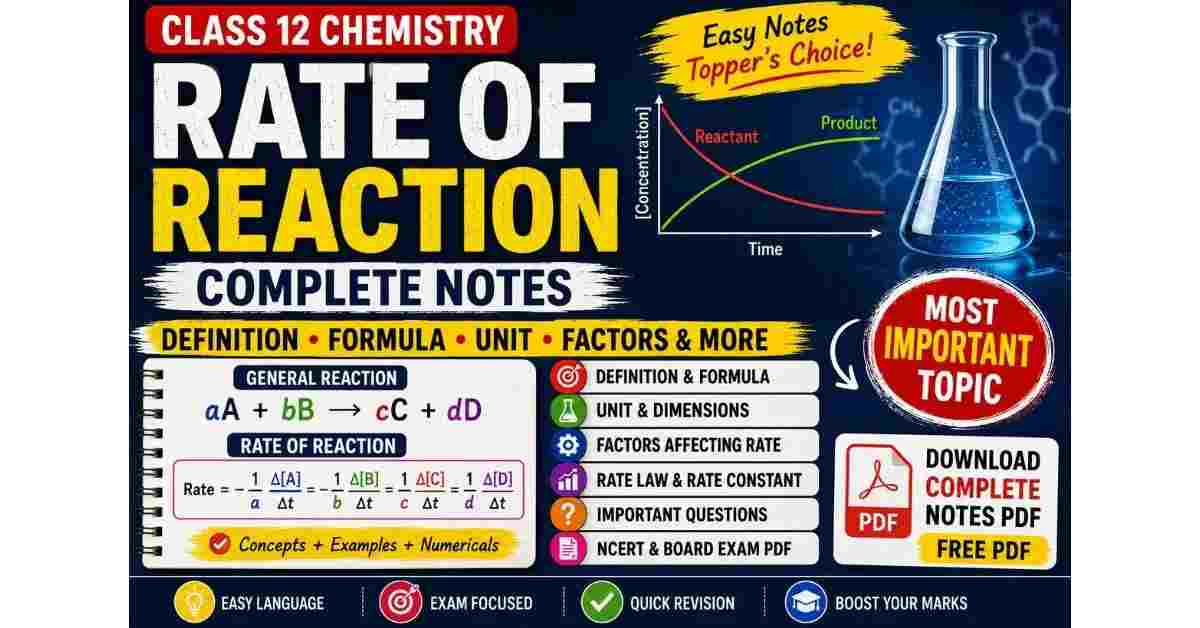
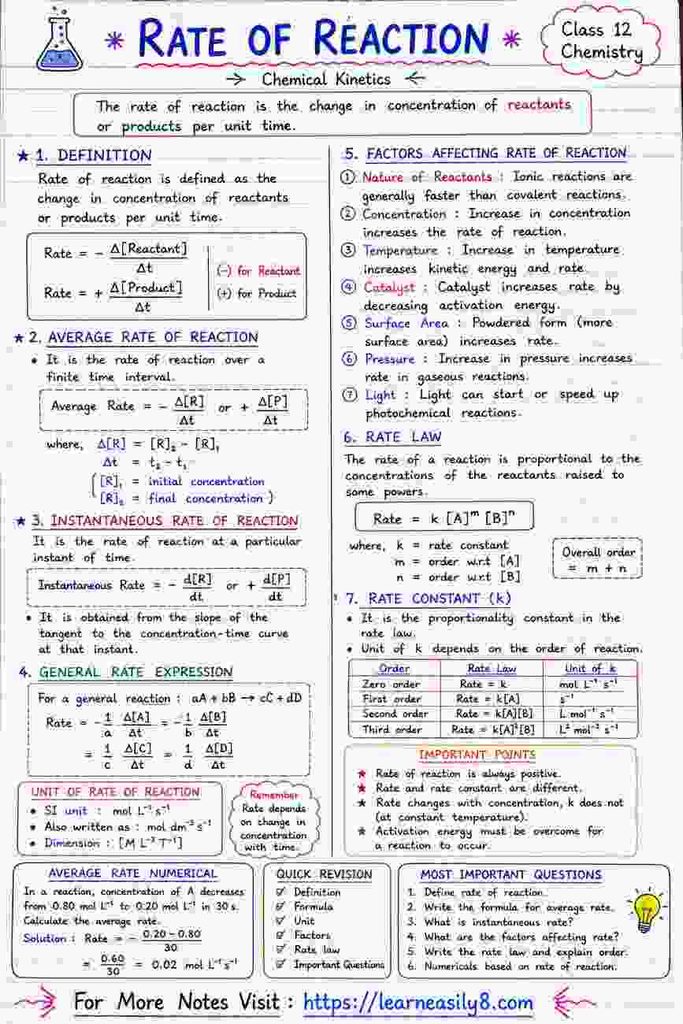
Rate of Reaction Class 12 Chemistry के Chemical Kinetics chapter का एक बहुत important topic है। किसी chemical reaction में reactants की concentration समय के साथ कम होती है और products की concentration बढ़ती है। इसी परिवर्तन की गति को Rate of Reaction (अभिक्रिया की दर) कहते हैं। सरल शब्दों में, कोई reaction कितनी तेजी या धीमी गति से आगे बढ़ रही है, इसे rate of reaction से बताया जाता है।
इस article में हम Rate of Reaction definition, formula, unit, average rate, instantaneous rate, factors affecting rate, rate law, rate constant, important formulas और board-exam questions को आसान Hindi + English में समझेंगे। ये notes CBSE Class 12 Chemistry, NCERT, Bihar Board, JEE और NEET की तैयारी के लिए भी उपयोगी हैं। Download NCERT BOOK PDF.
Rate of Reaction Class 12: Definition, Formula, Unit & Questions
Rate of Reaction Class 12 Chemistry के Chemical Kinetics chapter का एक बहुत important topic है। किसी chemical reaction में reactants की concentration समय के साथ कम होती है और products की concentration बढ़ती है। इसी परिवर्तन की गति को Rate of Reaction (अभिक्रिया की दर) कहते हैं। सरल शब्दों में, कोई reaction कितनी तेजी या धीमी गति से आगे बढ़ रही है, इसे rate of reaction से बताया जाता है।
इस article में हम Rate of Reaction definition, formula, unit, average rate, instantaneous rate, factors affecting rate, rate law, rate constant, important formulas और board-exam questions को आसान Hindi + English में समझेंगे। ये notes CBSE Class 12 Chemistry, NCERT, Bihar Board, JEE और NEET की तैयारी के लिए भी उपयोगी हैं।
What is Rate of Reaction?
Rate of Reaction का अर्थ है किसी chemical reaction में reactants या products की concentration में per unit time होने वाला परिवर्तन। Reaction के दौरान reactants की concentration घटती है, इसलिए उनकी rate को negative sign के साथ लिखा जाता है। दूसरी ओर, products की concentration बढ़ती है, इसलिए उनकी rate positive होती है। Rate of reaction हमें बताता है कि कोई reaction कितनी तेजी से हो रही है। जैसे combustion बहुत तेज reaction हो सकता है, जबकि iron का rusting comparatively slow reaction है।
Definition of Rate of Reaction
Definition:
किसी chemical reaction में reactants की concentration के घटने या products की concentration के बढ़ने की प्रति इकाई समय दर को Rate of Reaction कहते हैं।
Easy Definition for Exam:
Rate of reaction is the change in concentration of reactants or products per unit time.
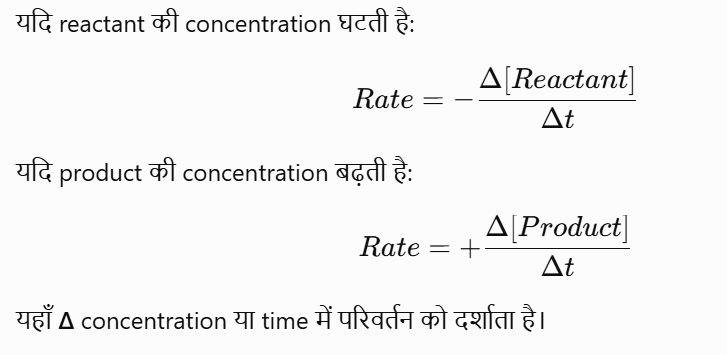
Formula of Rate of Reaction
किसी general reaction को मान लेते हैं:
aA+bB →cC+dD
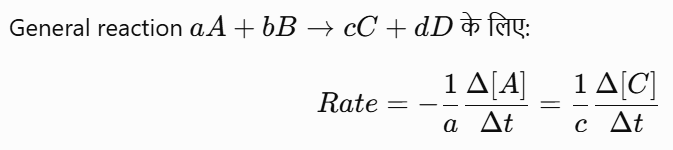
इस reaction के लिए rate को reactants और products दोनों के terms में लिखा जा सकता है। Reactants की concentration समय के साथ decrease होती है, इसलिए उनके सामने negative sign लगाया जाता है। Products की concentration increase होती है, इसलिए उनके सामने positive sign होता है। Stoichiometric coefficients a,b,c,d से divide करना आवश्यक है ताकि सभी substances के लिए reaction की समान rate प्राप्त हो।
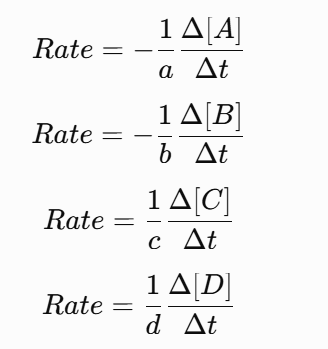
Why is Negative Sign Used for Reactants?
Reactants reaction के दौरान consume होते हैं, इसलिए उनकी concentration decrease होती है। अर्थात्: Δ[Reactant]=[Final]−[Initial]
का value negative हो सकता है। लेकिन rate को सामान्यतः positive quantity के रूप में express किया जाता है। इसलिए reactants की rate के आगे negative sign (-) लगाया जाता है।
याद रखें:
Reactant ↓ → Negative sign
Product ↑ → Positive sign
Average Rate of Reaction
किसी निश्चित time interval में concentration में हुए कुल परिवर्तन को उस time interval से divide करने पर Average Rate of Reaction प्राप्त होती है। यह पूरी अवधि के लिए reaction की औसत गति बताती है। Average rate में reaction के दो अलग-अलग समय पर concentration values का उपयोग किया जाता है। यदि reaction के दौरान rate लगातार बदल रही हो, तो average rate पूरी अवधि की एक overall value प्रदान करती है।
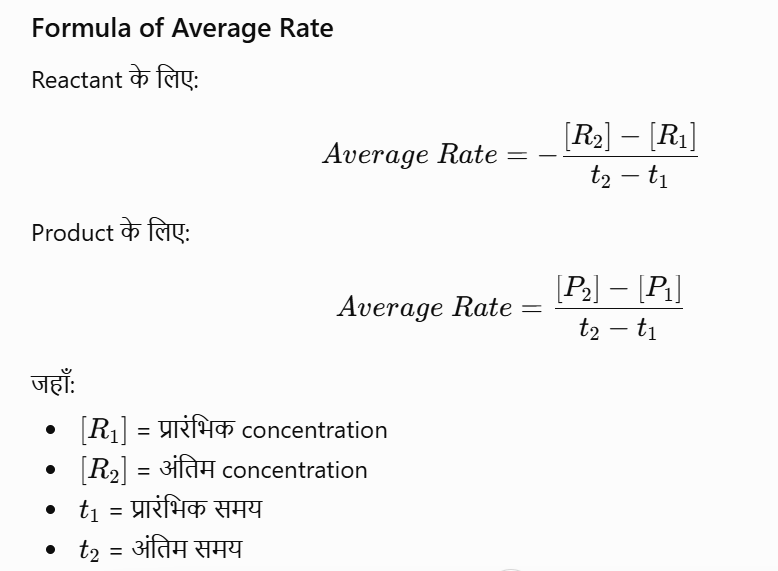
Example of Average Rate
मान लीजिए किसी reaction में reactant A की concentration 0.80 mol L⁻¹ से घटकर 0.50 mol L⁻¹ हो जाती है और यह परिवर्तन 10 seconds में होता है।
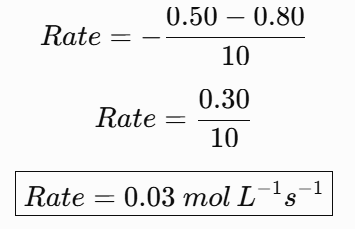
इसलिए reaction की average rate 0.03 mol L⁻¹ s⁻¹ है।
Instantaneous Rate of Reaction
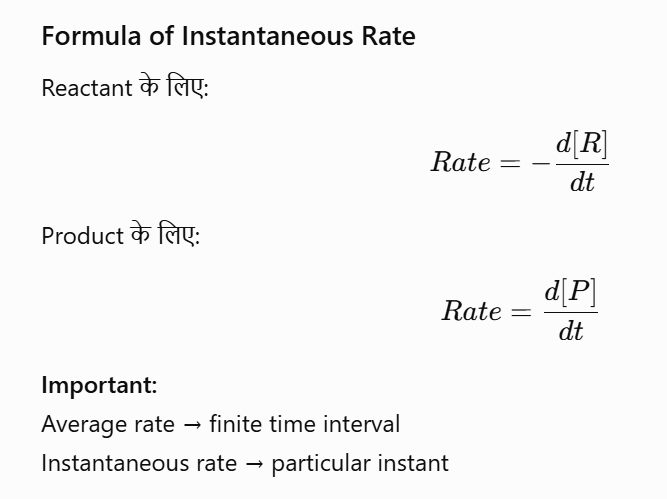
किसी particular instant या अत्यंत छोटे time interval पर reaction की rate को Instantaneous Rate कहते हैं। यह उस specific moment पर reaction की वास्तविक गति बताती है। जब time interval Δt बहुत छोटा होकर zero के करीब पहुँचता है, तब average rate instantaneous rate में बदल जाती है। Graphically इसे concentration-time curve पर उस point पर खींची गई tangent की slope से समझाया जा सकता है।
Average Rate vs Instantaneous Rate
| Average Rate | Instantaneous Rate |
|---|---|
| पूरे time interval की rate | किसी particular instant की rate |
| दो concentration values का उपयोग | Differential change का उपयोग |
| Δ का प्रयोग | d का प्रयोग |
| Approximate overall rate | Specific moment की rate |
| Concentration-time curve की chord से related | Tangent की slope से related |
Unit of Rate of Reaction
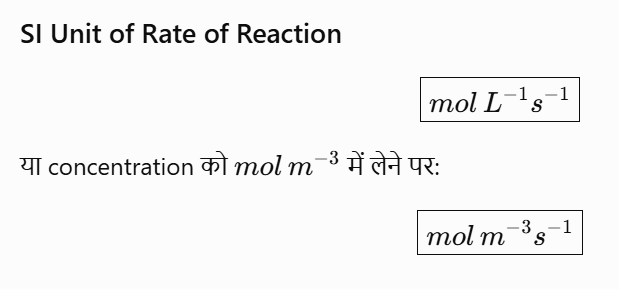
Rate of reaction concentration में change per unit time को दर्शाती है। इसलिए इसकी unit concentration और time की units पर depend करती है। Chemistry में concentration को सामान्यतः mol L⁻¹ और time को second (s) में express किया जाता है। इसलिए rate of reaction की सबसे common unit mol L⁻¹ s⁻¹ होती है। इसे mol L⁻¹ sec⁻¹ या mol dm⁻³ s⁻¹ के रूप में भी लिखा जा सकता है।
Board Exam Tip:
अगर concentration mol L⁻¹ में है और time second में है, तो rate की unit: mol L⁻¹ s⁻¹ होगी।
Read More: Chemical Kinetics MCQs for Class 12 – 50 Important Questions for Board, NEET & JEE 2027
How to Calculate Rate of Reaction?
Rate calculate करने के लिए पहले यह पहचानना जरूरी है कि question में reactant दिया गया है या product। फिर concentration change और time interval को identify करें। Reactant के लिए negative sign और product के लिए positive sign का ध्यान रखें। यदि reaction में stoichiometric coefficients दिए गए हैं, तो balanced equation के अनुसार coefficient से divide करना भी आवश्यक हो सकता है। अंत में appropriate unit जरूर लिखें।
Step-by-Step Method
- Chemical equation को balance करें।
- Initial concentration identify करें।
- Final concentration identify करें।
- Time interval निकालें।
- Appropriate rate formula लगाएँ।
- Reactant के लिए negative sign का ध्यान रखें।
- Unit लिखें।
Factors Affecting Rate of Reaction
Chemical reaction की rate सभी conditions में समान नहीं रहती। कई factors reaction की speed को प्रभावित करते हैं। इनमें nature of reactants, concentration, temperature, catalyst, surface area, pressure और light प्रमुख हैं। इन factors के कारण effective collisions की संख्या या molecules की kinetic energy बदल सकती है। इसलिए reaction कभी तेज और कभी धीमी हो सकती है। Board examinations में factors affecting rate एक बहुत important theoretical question है।
Nature of Reactants
Different substances की reactions की rates अलग-अलग होती हैं। Ionic reactions generally aqueous solution में relatively fast हो सकती हैं क्योंकि ions directly interact कर सकते हैं। जबकि कई covalent molecules में bonds को break और rearrange करने की आवश्यकता होती है, इसलिए reaction comparatively slow हो सकती है। इसलिए reactants की chemical nature reaction rate को प्रभावित करती है।
Effect of Concentration
Reactants की concentration बढ़ाने पर generally reaction rate बढ़ती है। इसका कारण यह है कि अधिक concentration में reacting particles की संख्या प्रति unit volume बढ़ जाती है। इससे particles के बीच collisions की frequency बढ़ती है और effective collisions की संख्या भी बढ़ सकती है।
Concentration ↑ → Collision frequency ↑ → Rate generally ↑
Effect of Temperature
Temperature बढ़ाने पर molecules की kinetic energy बढ़ जाती है। इससे अधिक particles के पास activation energy के बराबर या उससे अधिक energy हो जाती है। Consequently, effective collisions की संख्या बढ़ती है और reaction rate बढ़ जाती है। सामान्यतः temperature बढ़ाने से chemical reactions तेज होती हैं।
Effect of Catalyst
Catalyst ऐसा substance है जो reaction की rate को बदलता है और reaction के अंत में chemically consumed नहीं होता। Catalyst reaction के लिए एक alternative pathway provide कर सकता है जिसकी activation energy कम होती है। इसलिए अधिक particles effective collisions कर पाते हैं और reaction तेजी से होती है।
Important: Catalyst equilibrium constant को नहीं बदलता; यह forward और backward reactions की rates को प्रभावित कर सकता है।
Effect of Surface Area
Solid reactants में surface area बढ़ाने पर reaction rate generally बढ़ जाती है। Powdered solid का surface area उसी substance के बड़े pieces की तुलना में अधिक होता है। इसलिए powder के particles अधिक contact area provide करते हैं और collisions की frequency बढ़ जाती है।
Powdered solid → Larger surface area → Faster reaction
Effect of Pressure
Pressure का significant effect मुख्यतः gaseous reactions में देखा जाता है। Gas का pressure बढ़ाने पर particles comparatively closer हो जाते हैं और effective concentration बढ़ सकती है। इससे collisions की frequency बढ़ती है और reaction rate generally बढ़ सकती है।
Effect of Light
कुछ photochemical reactions में light reaction को initiate या accelerate कर सकती है। Light energy molecules को excited state में पहुँचा सकती है, जिससे reaction होने की संभावना बढ़ जाती है। उदाहरण के लिए कुछ reactions sunlight की presence में अधिक तेजी से होती हैं।
Rate Law and Rate of Reaction
Rate law reaction की rate और reactant concentrations के बीच mathematical relationship बताता है। किसी general reaction के लिए experimentally rate law determine किया जाता है। इसे देखकर हम समझ सकते हैं कि किसी particular reactant की concentration बदलने पर reaction rate किस प्रकार बदलती है। Rate law में powers reaction के order को दर्शाती हैं।
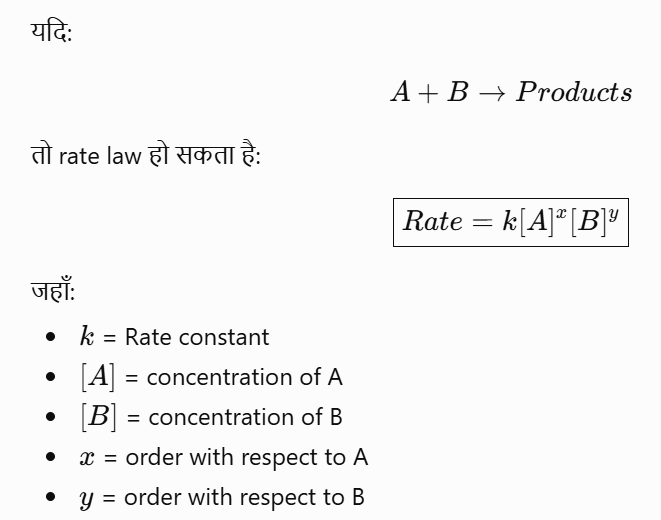
Important: Reaction order generally experimentally determined होता है; इसे केवल balanced chemical equation देखकर हमेशा नहीं बताया जा सकता।
Read Also: Ncert Solutions of Chemical Kinetics: Free Pdf Download for Class 12th
Rate Constant (k)
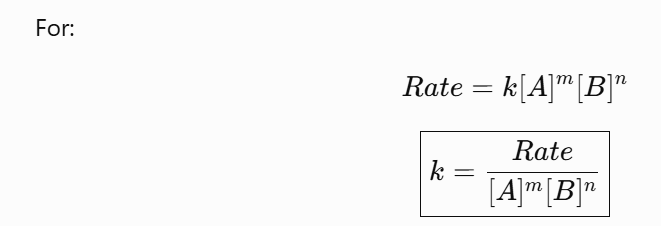
Rate law में proportionality constant को Rate Constant (k) कहते हैं। जब reactants की concentrations को suitable values पर लिया जाता है, rate constant reaction की kinetic behaviour को describe करता है। किसी particular reaction के लिए fixed temperature पर k का value constant रहता है। लेकिन temperature बदलने पर rate constant भी बदल सकता है।
Rate Constant की Unit
Rate constant की unit reaction के overall order पर depend करती है।
| Order | Unit of k |
|---|---|
| Zero order | mol L⁻¹ s⁻¹ |
| First order | s⁻¹ |
| Second order | L mol⁻¹ s⁻¹ |
| Third order | L² mol⁻² s⁻¹ |
Exam Tip: Rate की unit और rate constant की unit को कभी confuse न करें।
Difference Between Rate of Reaction and Rate Constant
| Rate of Reaction | Rate Constant |
|---|---|
| Reaction की actual speed बताती है | Rate law का proportionality constant है |
| Concentration पर depend कर सकती है | Fixed temperature पर given reaction के लिए constant रहता है |
| Unit सामान्यतः mol L⁻¹ s⁻¹ | Unit order पर depend करती है |
| Reaction के दौरान बदल सकती है | Fixed conditions में constant रहता है |
| Rate law से calculate की जा सकती है | k=Rate/[Concentration]order से निकाला जा सकता है |
Order of Reaction
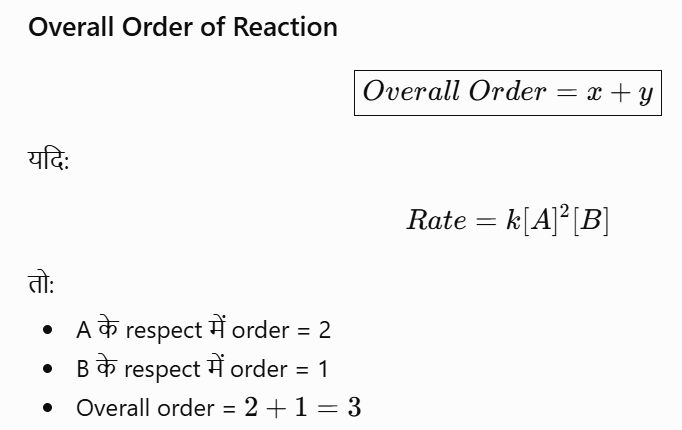
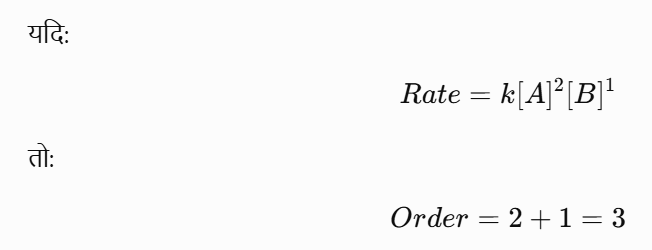
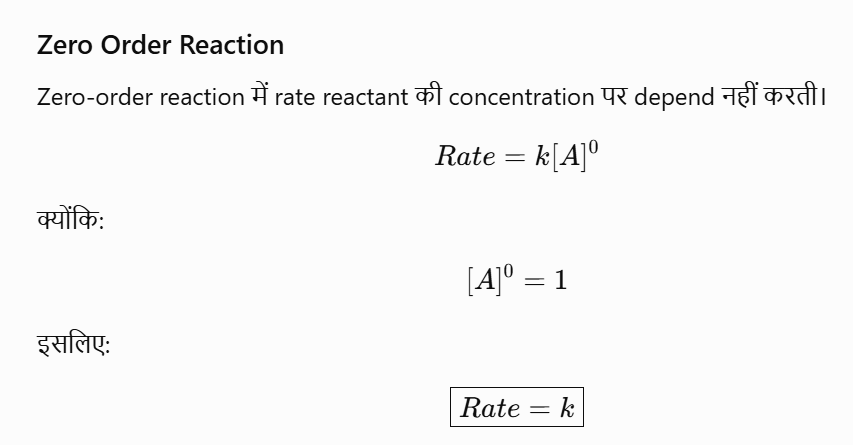
Order of reaction rate law में concentration terms की powers का sum होता है। यह बताता है कि reactant concentration में change होने पर reaction rate किस प्रकार प्रभावित होती है। Order zero, first, second या fractional भी हो सकता है। Reaction का order experimentally determined होता है और यह molecularity से अलग concept है।
First Order Reaction
First-order reaction में rate reactant की concentration की first power के proportional होती है।
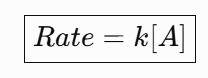
इस प्रकार concentration double होने पर, अन्य conditions same होने पर, rate भी double हो सकती है।
Second Order Reaction
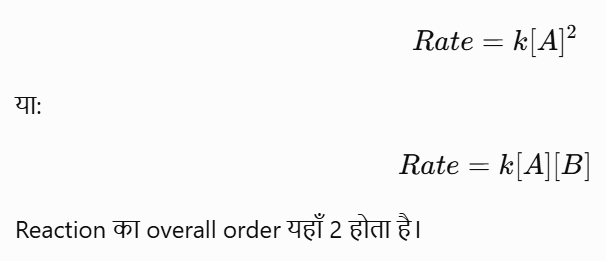
Second-order reaction में rate concentration की second power या दो concentrations के product पर depend कर सकती है।
Rate of Reaction and Collision Theory
Collision Theory के अनुसार chemical reaction तभी हो सकती है जब reacting particles एक-दूसरे से collide करें और collision में पर्याप्त energy तथा suitable orientation हो। हर collision chemical reaction produce नहीं करती। केवल वे collisions जो required energy और proper orientation की conditions satisfy करती हैं, effective collisions कहलाती हैं। Temperature और concentration जैसे factors effective collisions की संख्या को प्रभावित करते हैं।
Effective Collision
Effective collision के लिए मुख्यतः:
- Particles में sufficient energy होनी चाहिए।
- Particles की orientation suitable होनी चाहिए।
- Energy activation energy के बराबर या उससे अधिक होनी चाहिए।
Activation Energy
किसी chemical reaction को शुरू करने के लिए reactant molecules को जिस minimum energy की आवश्यकता होती है, उसे Activation Energy (Ea) कहते हैं। जिन molecules की energy activation energy से कम होती है, वे effective reaction नहीं कर पाते। Temperature बढ़ाने पर अधिक molecules activation energy barrier को cross कर सकते हैं, जिससे reaction rate बढ़ जाती है।
Ea= Minimum energy required for an effective reaction
Catalyst and Activation Energy
Catalyst एक alternative reaction pathway provide करता है जिसकी activation energy comparatively कम होती है। Catalyst→Ea↓→Effective collisions↑→Rate↑
Important Graphs Related to Rate of Reaction
Graphs Chemical Kinetics में concepts को visually समझने के लिए important हैं। Concentration-time graph से reaction के दौरान reactant या product concentration में होने वाला परिवर्तन देखा जा सकता है। सामान्यतः reactant की concentration समय के साथ घटती है, जबकि product की concentration बढ़ती है। Curve की slope reaction की rate के बारे में information देती है।
Concentration vs Time Graph
- Reactant concentration → generally decreases with time.
- Product concentration → generally increases with time.
- Curve की slope → rate से related होती है।
- किसी particular point पर tangent की slope → instantaneous rate बताती है।
Energy Profile and Catalyst
Energy profile में catalyst की presence में alternative pathway की activation energy कम दिखाई जाती है।
Without catalyst: Higher Ea
With catalyst: Lower Ea
इसलिए catalyst reaction को faster बनाता है।
Important NCERT & Board Exam Questions
Very Short Answer Questions
Q1. What is the rate of reaction?
Answer: किसी reaction में reactants की concentration के decrease या products की concentration के increase की प्रति unit time दर को rate of reaction कहते हैं।
Q2. What is the SI unit of rate of reaction?
Answer: Common concentration unit के आधार पर rate की unit: molL−1s−1 होती है।
Q3. Why is a negative sign used for reactants?
Answer: Reactants की concentration reaction के दौरान decrease होती है। Rate को positive quantity रखने के लिए reactant की concentration change के आगे negative sign लगाया जाता है।
Q4. What is instantaneous rate?
Answer: किसी particular instant पर chemical reaction की rate को instantaneous rate कहते हैं।
Q5. What is rate constant?
Answer: Rate law में proportionality constant को rate constant k कहते हैं।
Short Answer Questions
Q1. Differentiate between average and instantaneous rate.
Answer: Average rate एक निश्चित time interval में concentration change की rate है, जबकि instantaneous rate किसी particular instant पर reaction की rate बताती है। Average rate में Δ का प्रयोग किया जाता है, जबकि instantaneous rate में differential notation d का प्रयोग होता है।
Q2. How does temperature affect reaction rate?
Answer: Temperature बढ़ने पर molecules की kinetic energy बढ़ती है और अधिक molecules activation energy से अधिक energy प्राप्त करते हैं। इससे effective collisions की संख्या बढ़ती है और reaction rate generally बढ़ जाती है।
Q3. How does a catalyst increase the rate of reaction?
Answer: Catalyst reaction के लिए एक alternative pathway provide करता है जिसकी activation energy कम होती है। इसलिए अधिक reactant molecules effective collisions कर पाते हैं और reaction की rate बढ़ जाती है।
Q4. How does concentration affect reaction rate?
Answer: Reactants की concentration बढ़ने पर particles की संख्या per unit volume बढ़ती है। इससे collision frequency और effective collisions बढ़ सकती हैं, जिसके कारण reaction rate generally बढ़ती है।
Important Numericals on Rate of Reaction
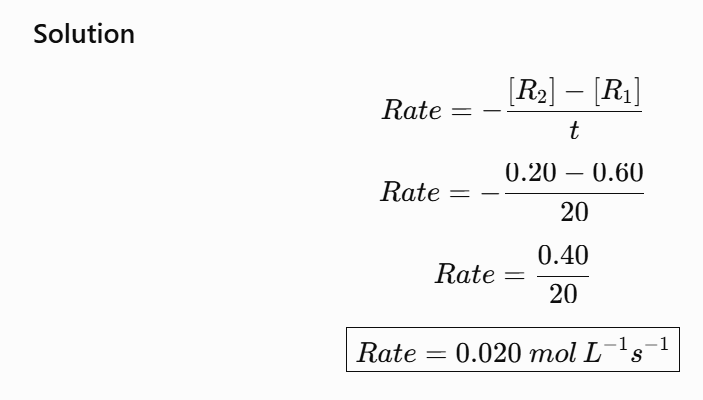
Numerical 1: Average Rate
एक reactant की concentration 0.60 mol L⁻¹ से घटकर 0.20 mol L⁻¹ हो जाती है। यह परिवर्तन 20 seconds में होता है। Average rate calculate करें।
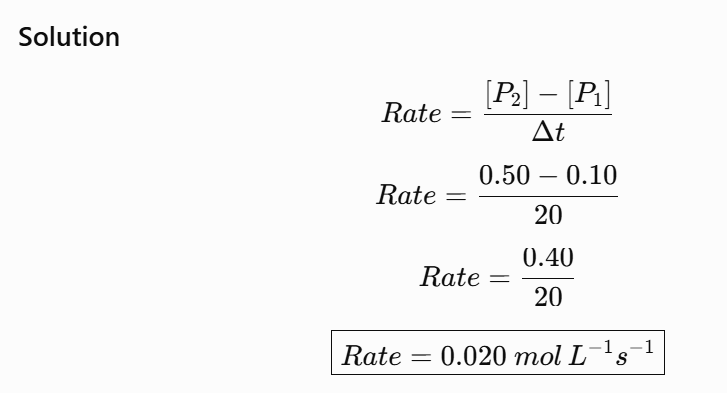
Numerical 2: Product Formation
किसी reaction में product की concentration 0.10 mol L⁻¹ से बढ़कर 0.50 mol L⁻¹ हो जाती है। समय 20 seconds है। Rate calculate करें।
Rate of Reaction – Quick Revision Notes
- Rate of reaction = concentration change per unit time.
- Reactant की concentration decrease होती है।
- Product की concentration increase होती है।
- Reactant के लिए negative sign।
- Product के लिए positive sign।
- Common unit = mol L⁻¹ s⁻¹।
- Average rate → finite time interval।
- Instantaneous rate → particular instant।
- Concentration बढ़ने पर rate generally बढ़ती है।
- Temperature बढ़ने पर rate generally बढ़ती है।
- Catalyst activation energy कम करता है।
- Surface area बढ़ने पर solid की reaction rate generally बढ़ती है।
- Gaseous reaction में pressure rate को affect कर सकता है।
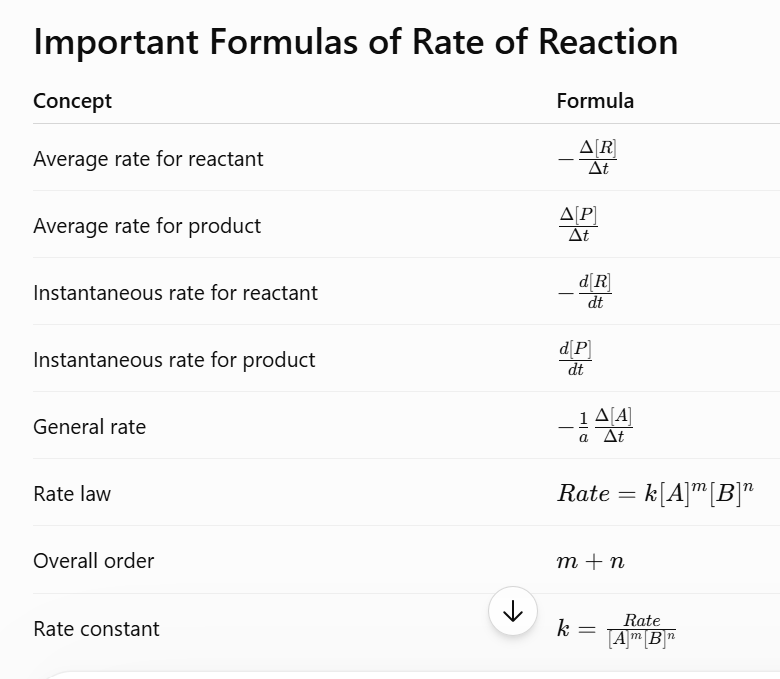
- Rate law: Rate=k[A]m[B]n
- Overall order = m+n
- Rate constant को k से represent करते हैं।
Know More: Chemical Kinetics Class 12: Notes For Chapter 4 Chemical kinetics
Frequently Asked Questions (FAQs)
What is Rate of Reaction?
Rate of reaction किसी chemical reaction में reactants या products की concentration में per unit time change है।
What is the formula of Rate of Reaction?
What is the unit of Rate of Reaction?
Commonly used unit: molL−1s−1
What factors affect the Rate of Reaction?
मुख्य factors हैं nature of reactants, concentration, temperature, catalyst, surface area, pressure और light।
What is Average Rate?
एक निश्चित time interval में concentration change per unit time को average rate कहते हैं।
What is Instantaneous Rate?
किसी particular instant पर reaction की rate को instantaneous rate कहते हैं।
Does a catalyst increase the rate of reaction?
हाँ। Catalyst एक alternative pathway provide करके activation energy कम कर सकता है, जिससे reaction की rate बढ़ जाती है।
What is the difference between Rate and Rate Constant?
Rate reaction की current speed बताती है और concentration पर depend कर सकती है, जबकि rate constant k fixed temperature पर given reaction के लिए rate law का proportionality constant होता है।
Why does temperature increase reaction rate?
Temperature बढ़ाने पर molecules की kinetic energy बढ़ती है और activation energy से अधिक energy वाले molecules की संख्या बढ़ती है। इससे effective collisions बढ़ती हैं और reaction तेज होती है।
Conclusion
Rate of Reaction Chemical Kinetics का fundamental concept है और Class 12 Chemistry में इससे जुड़े questions बार-बार पूछे जाते हैं। इसका basic idea बहुत सरल है—किसी reaction में concentration कितनी तेजी से बदल रही है, वही reaction की rate है। इसके लिए reactants के लिए negative और products के लिए positive sign का ध्यान रखना चाहिए। Concentration, temperature, catalyst, surface area, pressure और reactants की nature reaction rate को प्रभावित करते हैं। Board exam के लिए definition, formula, unit, average rate, instantaneous rate, rate law, rate constant और factors affecting rate को विशेष रूप से तैयार करें।