
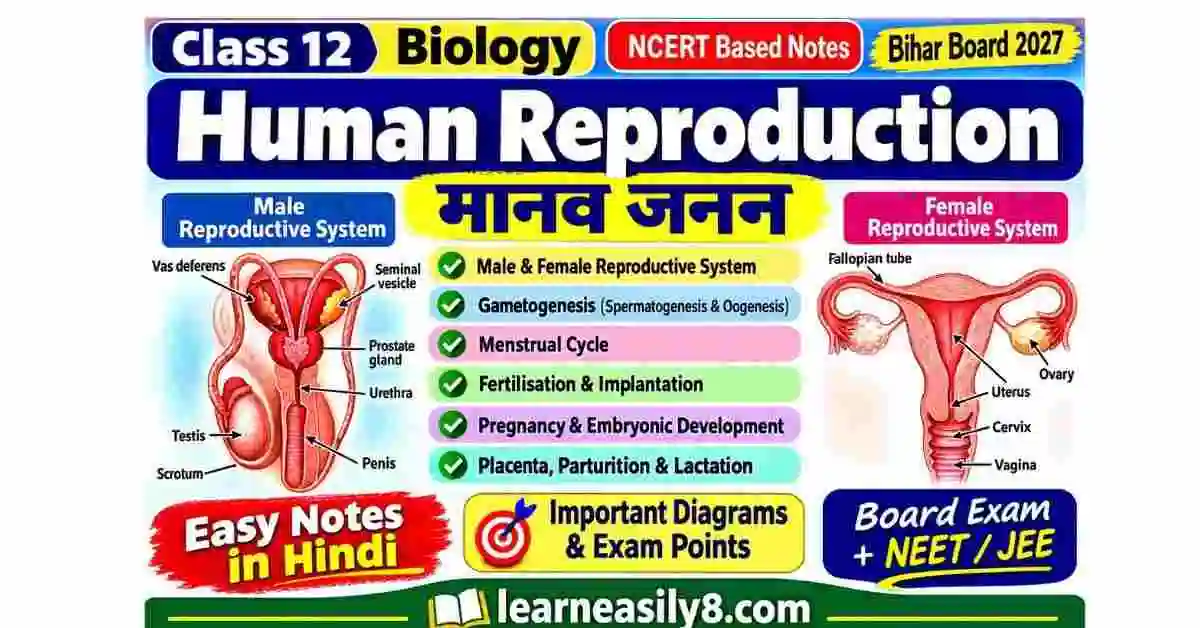
Human Reproduction (मानव जनन) Class 12 Biology का एक अत्यंत महत्वपूर्ण अध्याय है। इस chapter में मानव नर एवं मादा जनन तंत्र, gametogenesis, menstrual cycle, fertilisation, implantation, pregnancy, embryonic development, parturition और lactation जैसे महत्वपूर्ण topics का अध्ययन किया जाता है। Bihar Board तथा अन्य बोर्ड परीक्षाओं में इस chapter से short answer, long answer, diagram-based questions और objective questions अक्सर पूछे जाते हैं।
इस लेख में Human Reproduction Class 12 Biology Notes in Hindi को सरल भाषा में NCERT pattern के अनुसार समझाया गया है, ताकि विद्यार्थी Board Exam के साथ-साथ NEET/JEE जैसी प्रतियोगी परीक्षाओं की भी तैयारी कर सकें। Download NCERT BOOK PDF.
Human Reproduction Class 12 Biology Notes
Human Reproduction – मानव जनन क्या है?
मानव में reproduction एक sexual mode of reproduction है, जिसमें नर और मादा gametes के fusion से offspring का निर्माण होता है।
मानव में reproduction के लिए दो प्रमुख प्रकार के reproductive organs होते हैं:
- Male Reproductive System – नर जनन तंत्र
- Female Reproductive System – मादा जनन तंत्र
Male में male gamete को sperm तथा female में female gamete को ovum/egg कहते हैं।
Sperm और ovum के fusion को fertilisation (निषेचन) कहते हैं। इसके परिणामस्वरूप zygote बनता है।
Male Reproductive System – नर जनन तंत्र
Male reproductive system में निम्न प्रमुख अंग पाए जाते हैं:
- Testes
- Scrotum
- Epididymis
- Vas deferens
- Ejaculatory duct
- Urethra
- Penis
- Accessory glands
Testes – वृषण
मनुष्य में एक pair testes पाया जाता है। ये scrotum में स्थित होते हैं।
Testes के प्रमुख कार्य हैं:
- Sperm का निर्माण करना।
- Male sex hormone testosterone का secretion करना।
Testis के अंदर अनेक seminiferous tubules पाए जाते हैं। यहीं spermatogenesis की प्रक्रिया द्वारा sperm बनते हैं।
Scrotum – अंडकोश
Scrotum testes को body cavity के बाहर रखता है। Sperm formation के लिए शरीर के सामान्य तापमान से लगभग 2–2.5°C कम तापमान आवश्यक होता है।
इसलिए testes scrotum में स्थित होते हैं।
Seminiferous Tubules
Testes के अंदर highly coiled seminiferous tubules होती हैं।
इनकी wall में दो प्रमुख प्रकार की cells मिलती हैं:
- Sertoli cells
- Spermatogenic cells
Sertoli cells developing germ cells को nourishment प्रदान करती हैं।
Seminiferous tubules के बीच connective tissue में Leydig cells या interstitial cells पाई जाती हैं। ये androgen अर्थात मुख्य रूप से testosterone का secretion करती हैं।
Male Accessory Glands
Male reproductive system में तीन प्रमुख accessory glands होती हैं:
- Seminal vesicles
- Prostate gland
- Bulbourethral glands
इन glands के secretions sperm के साथ मिलकर semen बनाते हैं।
Seminal Vesicles
Seminal vesicles का secretion fructose से rich होता है। Fructose sperm को energy प्रदान करने में सहायता करता है।
Prostate Gland
Prostate gland का secretion semen के fluid part में योगदान करता है और sperm की motility तथा survival में सहायता करता है।
Bulbourethral Glands
ये glands mucus-like secretion बनाती हैं, जो lubrication में सहायता करता है।
Spermatogenesis – शुक्राणुजनन
Spermatogenesis वह process है जिसमें male germ cells से mature sperm बनते हैं।
यह प्रक्रिया testes की seminiferous tubules में puberty के बाद शुरू होती है।
मुख्य stages:
Spermatogonium → Primary spermatocyte → Secondary spermatocyte → Spermatid → Spermatozoa
Spermatogonium
Spermatogonia diploid cells होती हैं और इनमें chromosome number 2n होता है।
कुछ spermatogonia mitosis द्वारा divide करती हैं और आगे sperm formation में भाग लेती हैं।
Primary Spermatocyte
Growth के बाद spermatogonium primary spermatocyte में बदलता है।
Primary spermatocyte meiosis-I करता है।
Secondary Spermatocytes
Meiosis-I के बाद दो haploid secondary spermatocytes बनते हैं।
इनमें chromosome number n होता है।
Spermatids
Secondary spermatocytes meiosis-II द्वारा चार haploid spermatids बनाते हैं।
Spermatozoa
Spermatids transformation की process से mature spermatozoa में बदलते हैं। इस process को Spermiogenesis कहते हैं।
Sperm का release seminiferous tubules से बाहर होने की प्रक्रिया को Spermiation कहते हैं।
Structure of Human Sperm
एक mature sperm के चार मुख्य भाग होते हैं:
- Head
- Neck
- Middle piece
- Tail
Head
Head में nucleus होता है। इसके आगे acrosome पाया जाता है।
Acrosome में ऐसे enzymes होते हैं जो ovum की surrounding layers को penetrate करने में sperm की सहायता करते हैं।
Middle Piece
Middle piece में अनेक mitochondria पाए जाते हैं। ये sperm movement के लिए energy प्रदान करते हैं।
Tail
Tail sperm को movement करने में सहायता करती है।
Female Reproductive System – मादा जनन तंत्र
Female reproductive system में निम्न प्रमुख अंग शामिल हैं:
- A pair of ovaries
- Oviducts/Fallopian tubes
- Uterus
- Cervix
- Vagina
- External genitalia
इसके अलावा mammary glands भी reproduction में महत्वपूर्ण भूमिका निभाती हैं।
Ovaries – अंडाशय
Female में एक pair ovaries पाया जाता है।
Ovaries के प्रमुख कार्य:
- Ovum का निर्माण
- Female sex hormones का secretion
मुख्य female hormones हैं:
- Estrogen
- Progesterone
Ovary में follicles पाए जाते हैं, जिनमें developing female gamete होता है।
Oviduct – फैलोपियन ट्यूब
Oviduct को Fallopian tube भी कहा जाता है।
इसका एक सिरा ovary के पास तथा दूसरा uterus से जुड़ा होता है।
Oviduct के प्रमुख parts:
- Infundibulum
- Ampulla
- Isthmus
Ampullary-isthmic junction सामान्यतः fertilisation का प्रमुख site है।
Uterus – गर्भाशय
Uterus एक muscular organ है जिसमें embryo का implantation और development होता है।
Uterine wall की तीन layers होती हैं:
- Perimetrium
- Myometrium
- Endometrium
Endometrium implantation के लिए महत्वपूर्ण है।
यदि fertilisation नहीं होता है तो endometrium की lining टूटकर menstrual flow के रूप में बाहर निकलती है।
Female Gametogenesis – Oogenesis
Female gamete formation की प्रक्रिया को Oogenesis कहते हैं।
यह प्रक्रिया ovary में होती है।
Oogenesis की प्रमुख stages:
Oogonium → Primary oocyte → Secondary oocyte → Ovum
Oogenesis की शुरुआत embryonic stage में ही हो जाती है।
Birth के समय ovaries में primary oocytes मौजूद रहते हैं।
Puberty के बाद प्रत्येक menstrual cycle में सामान्यतः एक dominant follicle mature होकर ovulation करता है।
Ovulation – अंडोत्सर्जन
Ovary से mature secondary oocyte के release होने को Ovulation कहते हैं।
Ovulation मुख्यतः LH surge के कारण होता है।
Menstrual cycle में लगभग मध्य समय के आसपास ovulation होता है, हालांकि वास्तविक timing cycle length के अनुसार बदल सकती है।
Menstrual Cycle – मासिक चक्र
Female में reproductive cycle को menstrual cycle कहा जाता है।
एक typical menstrual cycle लगभग 28 days का माना जाता है, हालांकि व्यक्ति-व्यक्ति में cycle length अलग हो सकती है।
इसके प्रमुख phases हैं:
- Menstrual Phase
- Follicular/Proliferative Phase
- Ovulation
- Luteal/Secretory Phase
Menstrual Phase
यदि fertilisation नहीं होता है तो corpus luteum degenerate हो जाता है।
Estrogen और progesterone का level कम होने से endometrium टूटने लगता है।
इसके कारण menstrual bleeding होती है।
Follicular Phase
इस phase में ovarian follicles develop होते हैं।
FSH follicles की growth में महत्वपूर्ण भूमिका निभाता है।
Developing follicles estrogen का secretion करते हैं।
Estrogen के प्रभाव से endometrium पुनः develop होने लगता है।
Ovulation Phase
High estrogen level के कारण pituitary से LH surge होता है।
LH surge mature follicle से secondary oocyte के release को trigger करता है।
इसे ovulation कहते हैं।
Luteal Phase
Ovulation के बाद ruptured follicle corpus luteum में बदल जाता है।
Corpus luteum मुख्यतः progesterone का secretion करता है।
Progesterone endometrium को implantation के लिए बनाए रखने में सहायता करता है।
Fertilisation – निषेचन
Male sperm और female secondary oocyte के fusion को fertilisation कहते हैं।
Human fertilisation सामान्यतः ampullary-isthmic junction of fallopian tube में होती है।
Sperm ovum की surrounding layers को penetrate करता है।
एक sperm के fusion के बाद secondary oocyte meiosis-II complete करता है और male तथा female pronuclei बनते हैं।
इनके fusion से zygote बनता है।
Zygote to Embryo
Fertilisation के बाद zygote लगातार mitotic divisions करता है।
इस प्रक्रिया को cleavage कहते हैं।
Developmental sequence को सामान्य रूप से इस प्रकार समझा जा सकता है:
Zygote → Morula → Blastocyst → Implantation
Blastocyst uterus की endometrium lining में attach होकर implant होता है।
इस process को Implantation कहते हैं।
Implantation – आरोपण
Blastocyst का uterus की endometrium lining में attach होकर embedded होना implantation कहलाता है।
Implantation pregnancy की शुरुआत की महत्वपूर्ण घटनाओं में से एक है।
Blastocyst की outer layer को trophoblast कहा जाता है, जो आगे placenta formation में महत्वपूर्ण भूमिका निभाती है।
Placenta – अपरा
Placenta एक temporary organ है जो mother और developing embryo के बीच महत्वपूर्ण physiological connection स्थापित करता है।
Placenta के प्रमुख कार्य:
- Nutrients की supply
- Oxygen supply
- Carbon dioxide removal
- Waste removal
- Hormone secretion
Placenta से कई hormones secret होते हैं, जैसे:
- hCG
- hPL
- Estrogen
- Progesterone
Pregnancy के शुरुआती समय में hCG का detection pregnancy test का आधार बनता है।
Pregnancy – गर्भावस्था
Fertilisation और implantation के बाद embryo का विकास uterus में होता है।
Pregnancy के दौरान embryo धीरे-धीरे विकसित होकर foetus का रूप लेता है।
इस दौरान विभिन्न organs और organ systems का development होता है।
Pregnancy को maintain करने में progesterone, estrogen और अन्य pregnancy-related hormones महत्वपूर्ण भूमिका निभाते हैं।
Embryonic Development
Embryo में विभिन्न tissues और organs का development क्रमशः होता है।
लगभग 8 weeks के बाद developing human को सामान्यतः foetus कहा जाता है।
Pregnancy के दौरान:
- Heart development
- Limb development
- Nervous system development
- Organ development
- Growth and maturation
जैसी महत्वपूर्ण घटनाएँ होती हैं।
Parturition – प्रसव
Full-term pregnancy के बाद child birth की process को Parturition कहते हैं।
Parturition के लिए hormonal और mechanical signals महत्वपूर्ण होते हैं।
Foetal signals तथा maternal hormonal changes के कारण uterus में contractions शुरू होते हैं।
Oxytocin uterine contractions को मजबूत करता है।
Positive feedback mechanism के कारण contractions बढ़ते जाते हैं और अंततः baby का birth होता है।
Lactation – दुग्ध स्राव
Child birth के बाद mammary glands milk produce करती हैं।
इस process को Lactation कहते हैं।
Pregnancy के दौरान mammary glands में structural changes होते हैं।
Delivery के बाद prolactin milk production में महत्वपूर्ण भूमिका निभाता है।
Milk ejection या milk let-down reflex में oxytocin महत्वपूर्ण भूमिका निभाता है।
Read Also: Molecular Basis of Inheritance Class 12 Biology Notes in Hindi | NCERT Notes
Colostrum – प्रथम दुग्ध
Delivery के शुरुआती दिनों में mother द्वारा secret किया गया yellowish milk colostrum कहलाता है।
Colostrum में antibodies, विशेषकर IgA, पाए जाते हैं।
यह newborn baby को passive immunity प्रदान करने में महत्वपूर्ण भूमिका निभाता है।
इसलिए newborn के लिए colostrum अत्यंत महत्वपूर्ण होता है।
Human Reproduction के Important Hormones
| Hormone | मुख्य कार्य |
|---|---|
| FSH | Follicle development तथा spermatogenesis में भूमिका |
| LH | Ovulation तथा Leydig cells stimulation |
| Testosterone | Male reproductive development एवं functions |
| Estrogen | Female reproductive development एवं endometrium growth |
| Progesterone | Endometrium maintenance एवं pregnancy support |
| hCG | Corpus luteum को बनाए रखने में सहायता |
| hPL | Pregnancy एवं mammary gland development में भूमिका |
| Prolactin | Milk production |
| Oxytocin | Uterine contraction एवं milk ejection |
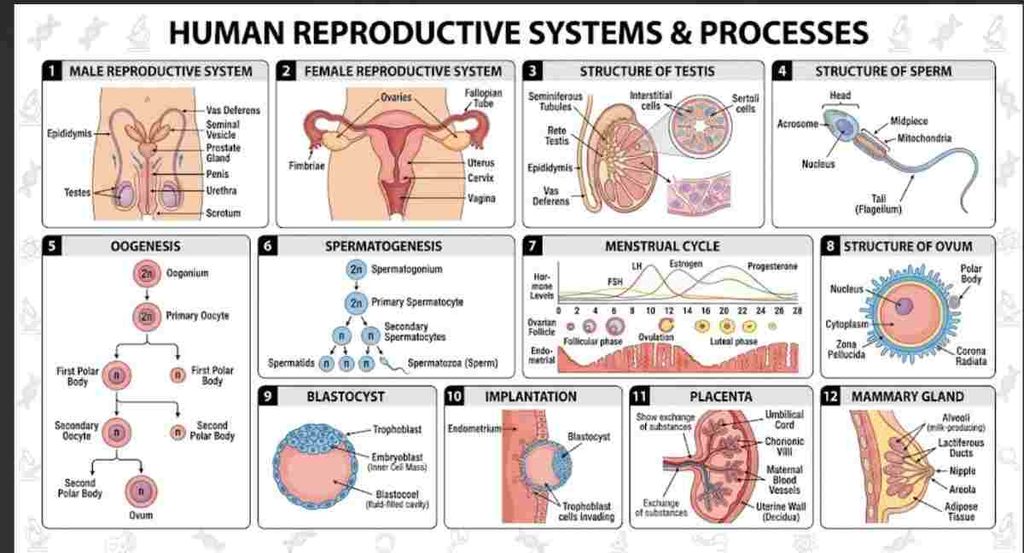
Human Reproduction – Important Diagrams
Board examination के लिए निम्न diagrams की practice विशेष रूप से करें:
- Male Reproductive System
- Female Reproductive System
- Structure of Testis
- Structure of Sperm
- Oogenesis
- Spermatogenesis
- Menstrual Cycle
- Structure of Ovum
- Blastocyst
- Implantation
- Placenta
- Mammary Gland
Diagram बनाते समय labels साफ और सही spelling में लिखना चाहिए।
Human Reproduction – Important One-Liners
Q1. Male gamete क्या है?
Ans. Sperm male gamete है।
Q2. Female gamete क्या है?
Ans. Ovum/egg female gamete है।
Q3. Spermatogenesis कहाँ होती है?
Ans. Seminiferous tubules of testes में।
Q4. Testosterone कौन-सी cells बनाती हैं?
Ans. Leydig cells।
Q5. Fertilisation का सामान्य site क्या है?
Ans. Ampullary-isthmic junction of fallopian tube।
Q6. Ovulation किस hormone के surge से होता है?
Ans. LH।
Q7. Implantation कहाँ होती है?
Ans. Uterine endometrium में।
Q8. Milk production के लिए कौन-सा hormone महत्वपूर्ण है?
Ans. Prolactin।
Q9. Milk ejection में कौन-सा hormone महत्वपूर्ण है?
Ans. Oxytocin।
Q10. Colostrum क्या है?
Ans. Birth के बाद शुरुआती दिनों में secret होने वाला antibody-rich milk।
Board Exam के लिए सबसे महत्वपूर्ण Topics
Human Reproduction chapter से परीक्षा में इन topics को विशेष रूप से तैयार करें:
- Male reproductive system
- Female reproductive system
- Spermatogenesis
- Oogenesis
- Structure of sperm
- Menstrual cycle
- Ovulation
- Fertilisation
- Implantation
- Placenta
- Pregnancy
- Parturition
- Lactation
- Colostrum
- Important reproductive hormones
Quick Revision – Human Reproduction
Testes → Sperm formation + Testosterone
Ovary → Ovum + Estrogen/Progesterone
Spermatogenesis → Sperm formation
Oogenesis → Female gamete formation
Ovulation → LH surge
Fertilisation → Sperm + Secondary oocyte
Zygote → Morula → Blastocyst
Implantation → Endometrium
Placenta → Mother–foetus exchange
Parturition → Child birth
Prolactin → Milk production
Oxytocin → Milk ejection + Uterine contraction
Know More: Electronic Devices Class 12 Notes in Hindi | Semiconductor Electronics, Diode & Rectifier
Conclusion
Human Reproduction – मानव जनन Class 12 Biology का एक महत्वपूर्ण chapter है। इस chapter को अच्छे से समझने के लिए केवल definitions याद करना पर्याप्त नहीं है। विद्यार्थियों को Male Reproductive System, Female Reproductive System, Spermatogenesis, Oogenesis, Menstrual Cycle, Fertilisation, Implantation, Placenta, Parturition और Lactation को diagrams के साथ समझना चाहिए।
Board Exam में अच्छे अंक प्राप्त करने के लिए diagrams की labelled practice, important hormones की functions और reproductive processes के sequence को बार-बार revise करें। NCERT की मूल terminology को ध्यान में रखते हुए Hindi के साथ English biological terms भी याद रखें।
Frequently Asked Questions (FAQs)
1. Human Reproduction Class 12 Biology में क्या पढ़ाया जाता है?
इस chapter में male एवं female reproductive systems, gametogenesis, menstrual cycle, fertilisation, implantation, pregnancy, parturition और lactation का अध्ययन किया जाता है।
2. Human fertilisation कहाँ होती है?
Human fertilisation सामान्यतः fallopian tube के ampullary-isthmic junction में होती है।
3. Spermatogenesis कहाँ होती है?
Spermatogenesis testes की seminiferous tubules में होती है।
4. Ovulation किस hormone के कारण होता है?
Ovulation मुख्य रूप से LH surge के कारण होता है।
5. Implantation क्या है?
Blastocyst का uterus की endometrium lining में attach होकर embedded होना implantation कहलाता है।
6. Placenta का क्या कार्य है?
Placenta developing foetus को nutrients और oxygen उपलब्ध कराने तथा carbon dioxide और metabolic wastes के exchange में सहायता करता है। यह कई महत्वपूर्ण hormones भी secrete करता है।
7. Prolactin और Oxytocin का क्या कार्य है?
Prolactin milk production में तथा oxytocin milk ejection और uterine contraction में महत्वपूर्ण भूमिका निभाता है।
8. Colostrum क्या है?
Child birth के बाद शुरुआती दिनों में secret होने वाला antibody-rich पहला milk colostrum कहलाता है।