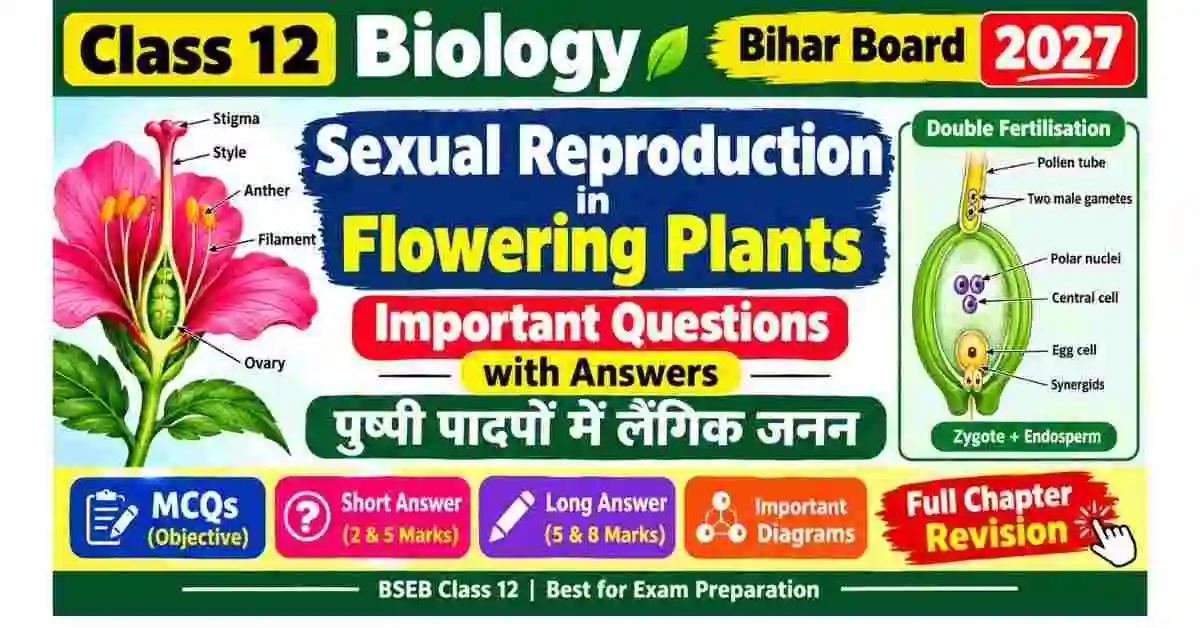
Sexual Reproduction in Flowering Plants – पुष्पी पादपों में लैंगिक जनन Class 12 Biology का एक महत्वपूर्ण अध्याय है। बिहार बोर्ड परीक्षा 2027 की तैयारी करने वाले विद्यार्थियों के लिए इस chapter में Flower Structure, Stamen, Microsporangium, Pollen Grain, Pistil, Ovule, Megasporogenesis, Embryo Sac, Pollination, Pollen-Pistil Interaction, Double Fertilisation, Endosperm, Embryo, Seed, Fruit, Apomixis और Polyembryony जैसे topics महत्वपूर्ण हैं। बिहार सरकार के e-Library में भी इस अध्याय को Class XII Biology के अंतर्गत शामिल किया गया है।
इस पोस्ट में आपको Bihar Board Class 12 Biology Chapter 2 Important Questions with Answers सरल हिंदी और आवश्यक English terms के साथ मिलेंगे। ये प्रश्न short answer, long answer और objective-type revision के लिए उपयोगी हैं। विद्यार्थियों को उत्तर याद करने के साथ-साथ labelled diagrams और biological processes के क्रम को भी समझना चाहिए।
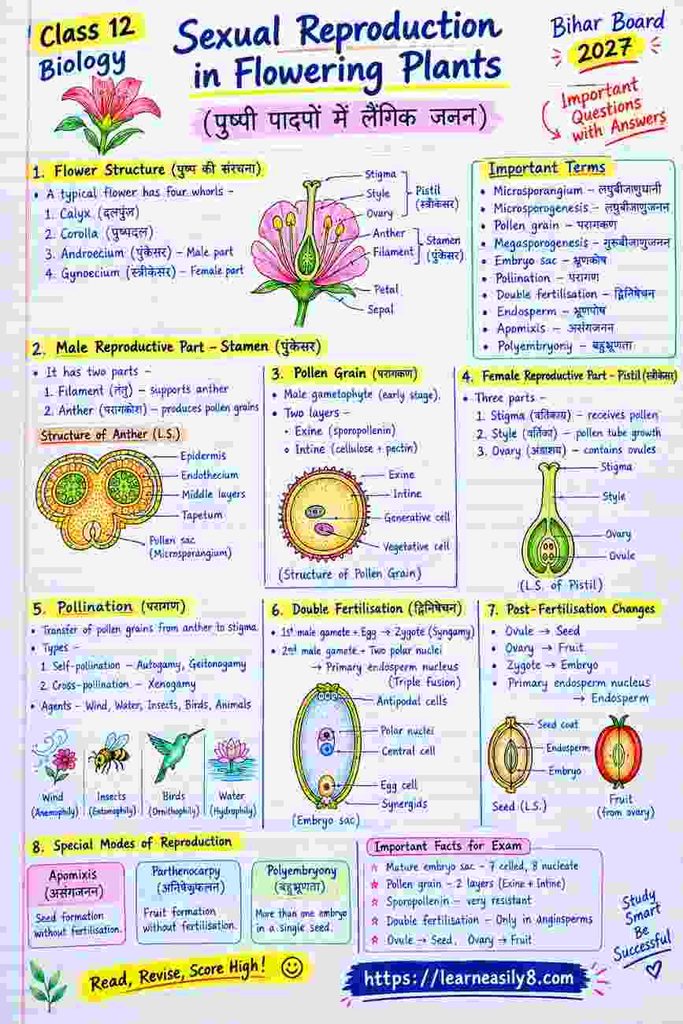
Sexual Reproduction in Flowering Plants के Important Topics
परीक्षा की तैयारी करते समय इन topics को विशेष रूप से revise करें:
- Flower – पुष्प की संरचना
- Stamen – पुंकेसर
- Microsporangium – लघुबीजाणुधानी
- Microsporogenesis – लघुबीजाणुजनन
- Pollen Grain – परागकण
- Pistil/Carpel – स्त्रीकेसर
- Ovule – बीजांड
- Megasporogenesis – गुरुबीजाणुजनन
- Embryo Sac – भ्रूणकोष
- Pollination – परागण
- Types of Pollination
- Agents of Pollination
- Outbreeding Devices
- Pollen-Pistil Interaction
- Fertilisation – निषेचन
- Double Fertilisation – द्विनिषेचन
- Endosperm – भ्रूणपोष
- Embryo – भ्रूण
- Seed Formation – बीज निर्माण
- Fruit Formation – फल निर्माण
- Apomixis – असंगजनन
- Parthenocarpy – अनिषेकफलन
- Polyembryony – बहुभ्रूणता
इन विषयों का coverage chapter के standard syllabus में भी मिलता है।
Biology Sexual Reproduction in Flowering Plants Class 12 Important Questions
प्रश्न 1. लैंगिक जनन क्या है?
उत्तर:
वह जनन जिसमें नर और मादा युग्मकों (Male and Female Gametes) के संलयन से युग्मनज (Zygote) का निर्माण होता है, लैंगिक जनन (Sexual Reproduction) कहलाता है।
पुष्पी पादपों में लैंगिक जनन मुख्य रूप से फूल के reproductive parts में होता है।
प्रश्न 2. पुष्प के नर जनन अंग का नाम क्या है?
उत्तर:
पुष्प का नर जनन अंग पुंकेसर (Stamen) कहलाता है। पुंकेसर को Androecium का भाग माना जाता है।
एक सामान्य पुंकेसर के दो मुख्य भाग होते हैं:
- Filament – तंतु
- Anther – परागकोश
Anther में pollen grains का निर्माण होता है।
प्रश्न 3. पुंकेसर (Stamen) के मुख्य भाग लिखिए।
उत्तर:
पुंकेसर के दो मुख्य भाग होते हैं:
- Filament (तंतु): यह anther को सहारा देता है।
- Anther (परागकोश): इसमें pollen grains बनते हैं।
परिपक्व anther सामान्यतः दो theca से बना होता है और प्रत्येक theca में pollen sacs पाए जाते हैं।
प्रश्न 4. Microsporangium क्या है?
उत्तर:
Microsporangium को सामान्यतः pollen sac कहा जाता है। यह anther के अंदर स्थित संरचना है जहाँ microspores/pollen grains का विकास होता है।
एक सामान्य microsporangium की wall में चार layers होती हैं:
- Epidermis
- Endothecium
- Middle layers
- Tapetum
Tapetum developing pollen grains को पोषण प्रदान करता है।
प्रश्न 5. Microsporogenesis क्या है?
उत्तर:
Microspore mother cells से meiosis द्वारा haploid microspores बनने की प्रक्रिया को Microsporogenesis (लघुबीजाणुजनन) कहते हैं।
इस प्रक्रिया में:
Pollen Mother Cell → Meiosis → Microspore Tetrad → Pollen Grains
Microspores आगे विकसित होकर mature pollen grains बनाते हैं।
प्रश्न 6. Pollen Grain क्या है?
उत्तर:
Pollen grain पुष्पी पादपों में नर gametophyte की प्रारंभिक अवस्था है। इसका निर्माण anther के microsporangium में होता है।
एक सामान्य pollen grain में दो प्रमुख layers होती हैं:
- Exine: बाहरी कठोर layer
- Intine: अंदर की पतली layer
Exine मुख्यतः sporopollenin से बनी होती है, जो अत्यंत resistant पदार्थ है।
प्रश्न 7. Sporopollenin क्या है?
उत्तर:
Sporopollenin pollen grain की exine में पाया जाने वाला अत्यधिक resistant जैविक पदार्थ है।
इसकी विशेषताएँ:
- बहुत resistant होता है।
- तापमान और रासायनिक प्रभावों को काफी हद तक सह सकता है।
- pollen grain को सुरक्षा देता है।
- pollen grain की exine का प्रमुख component है।
Read More: Solid State for 12th: रसायन विज्ञान के इस चैप्टर को बिना रटे कैसे मास्टर करें?
Female Reproductive Structure
प्रश्न 8. पुष्प का मादा जनन अंग कौन-सा है?
उत्तर:
पुष्प का मादा जनन अंग Pistil या Carpel (स्त्रीकेसर) कहलाता है। यह gynoecium का भाग होता है।
इसके तीन मुख्य भाग हैं:
- Stigma – वर्तिकाग्र
- Style – वर्तिका
- Ovary – अंडाशय
Stigma pollen grains को receive करता है।
प्रश्न 9. Ovule क्या है?
उत्तर:
Ovule को हिंदी में बीजांड कहा जाता है। यह ovary के अंदर स्थित होता है और निषेचन के बाद सामान्यतः seed में विकसित होता है।
Ovule में embryo sac पाया जाता है, जिसमें female gametophyte की संरचना होती है।
प्रश्न 10. Megasporogenesis क्या है?
उत्तर:
Megaspore mother cell से meiosis द्वारा haploid megaspores के निर्माण की प्रक्रिया को Megasporogenesis (गुरुबीजाणुजनन) कहते हैं।
आमतौर पर एक functional megaspore आगे विकसित होकर embryo sac बनाती है।
प्रश्न 11. Embryo Sac क्या है?
उत्तर:
Embryo sac पुष्पी पादपों का female gametophyte है।
सामान्य mature embryo sac में:
- 7 cells
- 8 nuclei
होते हैं। इसमें:
- 1 egg cell
- 2 synergids
- 3 antipodal cells
- 1 central cell containing two polar nuclei
पाए जाते हैं।
Pollination Important Questions
प्रश्न 12. Pollination क्या है?
उत्तर:
Anther से pollen grains के stigma तक transfer होने की प्रक्रिया को Pollination (परागण) कहते हैं।
परागण flowering plants में fertilisation के लिए आवश्यक प्रारंभिक घटनाओं में से एक है।
मुख्य रूप से pollination दो प्रकार का माना जाता है:
- Self-pollination
- Cross-pollination
प्रश्न 13. Autogamy क्या है?
उत्तर:
जब pollen grains उसी flower के anther से उसी flower के stigma तक पहुँचते हैं, तो इसे Autogamy कहते हैं।
यह self-pollination का एक प्रकार है।
प्रश्न 14. Geitonogamy क्या है?
उत्तर:
जब एक ही plant के एक flower से pollen grains उसी plant के दूसरे flower के stigma तक पहुँचते हैं, तो इसे Geitonogamy कहते हैं।
यह genetic रूप से अक्सर self-pollination के समान परिणाम देता है, हालांकि pollen transfer दो अलग-अलग flowers के बीच होता है।
प्रश्न 15. Xenogamy क्या है?
उत्तर:
जब pollen grains एक plant के flower से उसी species के दूसरे plant के flower के stigma तक पहुँचते हैं, तो इसे Xenogamy कहते हैं।
यह cross-pollination का वास्तविक रूप है और genetic variation को बढ़ाने में महत्वपूर्ण भूमिका निभाता है।
प्रश्न 16. Pollination के प्रमुख agents कौन-कौन से हैं?
उत्तर:
Pollination के प्रमुख agents हैं:
- Wind – वायु
- Water – जल
- Insects – कीट
- Birds – पक्षी
- Other animals – अन्य जन्तु
Insect pollination को Entomophily और wind pollination को Anemophily कहा जाता है।
Pollen-Pistil Interaction
प्रश्न 17. Pollen-Pistil Interaction क्या है?
उत्तर:
Pollen grain और pistil के बीच होने वाली recognition और interaction प्रक्रिया को Pollen-Pistil Interaction कहते हैं।
Stigma यह पहचानने में महत्वपूर्ण भूमिका निभाता है कि pollen compatible है या incompatible।
Compatible pollen स्वीकार किया जाता है और pollen tube growth शुरू कर सकती है। Incompatible pollen को pistil द्वारा reject किया जा सकता है।
प्रश्न 18. Outbreeding Devices क्या हैं?
उत्तर:
वे mechanisms जो self-pollination को रोकने या कम करने और cross-pollination को बढ़ावा देने में सहायता करते हैं, Outbreeding Devices कहलाते हैं।
प्रमुख उदाहरण:
- Anther और stigma का अलग-अलग समय पर mature होना
- Anther और stigma का अलग-अलग position में होना
- Self-incompatibility
- Unisexual flowers
इन mechanisms से cross-pollination को बढ़ावा मिल सकता है।
Fertilisation and Double Fertilisation
प्रश्न 19. Fertilisation क्या है?
उत्तर:
Male gamete और female gamete के fusion को Fertilisation (निषेचन) कहते हैं।
Flowering plants में pollen tube male gametes को embryo sac तक पहुँचाने में सहायता करती है। एक male gamete egg के साथ fusion करके zygote बनाता है।
प्रश्न 20. Double Fertilisation क्या है?
उत्तर:
Angiosperms में एक male gamete का egg के साथ fusion और दूसरे male gamete का polar nuclei/central cell के साथ fusion होना Double Fertilisation (द्विनिषेचन) कहलाता है।
इसमें दो fusion events होते हैं:
Syngamy:
Male gamete + Egg → Zygote
Triple Fusion:
Male gamete + Two Polar Nuclei → Primary Endosperm Nucleus
इसी कारण इसे Double Fertilisation कहा जाता है।
प्रश्न 21. Syngamy क्या है?
उत्तर:
एक male gamete और egg के fusion को Syngamy कहते हैं।
Male gamete + Egg → Zygote
Zygote आगे विकसित होकर embryo का निर्माण करता है।
प्रश्न 22. Triple Fusion क्या है?
उत्तर:
दूसरे male gamete के दो polar nuclei के साथ fusion को Triple Fusion कहा जाता है।
Male gamete + Two Polar Nuclei → Primary Endosperm Nucleus
इससे endosperm के विकास की शुरुआत होती है।
प्रश्न 23. Double Fertilisation का महत्व क्या है?
उत्तर:
Double fertilisation का प्रमुख महत्व:
- Zygote का निर्माण होता है।
- Embryo का विकास शुरू होता है।
- Endosperm का निर्माण होता है।
- Endosperm developing embryo को nutrition प्रदान करता है।
- यह angiosperms की प्रमुख विशेषताओं में से एक है।
Post-Fertilisation Events
प्रश्न 24. Fertilisation के बाद ovule और ovary का क्या होता है?
उत्तर:
Fertilisation के बाद सामान्यतः:
- Ovule → Seed
- Ovary → Fruit
- Zygote → Embryo
- Primary Endosperm Nucleus → Endosperm
में विकसित होते हैं।
इस प्रकार fertilisation के बाद flower में कई महत्वपूर्ण post-fertilisation changes होते हैं।
प्रश्न 25. Endosperm क्या है?
उत्तर:
Endosperm developing embryo को nutrition प्रदान करने वाला tissue है।
यह सामान्यतः fertilisation के बाद triple fusion से बने primary endosperm nucleus से विकसित होता है।
इसका मुख्य कार्य developing embryo को आवश्यक nutrients उपलब्ध कराना है।
प्रश्न 26. Seed क्या है?
उत्तर:
परिपक्व ovule को सामान्यतः Seed (बीज) कहा जाता है।
एक seed में सामान्यतः निम्न भाग पाए जाते हैं:
- Seed coat
- Embryo
- Cotyledons
- Endosperm, यदि उपस्थित हो
Seed पौधे की अगली generation के विकास में महत्वपूर्ण भूमिका निभाता है।
प्रश्न 27. Fruit Formation कैसे होती है?
उत्तर:
Fertilisation के बाद ovary सामान्यतः fruit में विकसित होती है।
Ovary → Fruit
Fruit developing seeds को protection देता है और कई पौधों में seed dispersal में भी सहायता करता है।
कुछ plants में fertilisation के बिना भी fruit development हो सकता है, जिसे Parthenocarpy कहते हैं।
Read Also: Notes of d-Block Elements : Complete NCERT Notes, Properties, Uses & Important Questions
Special Modes of Reproduction
प्रश्न 28. Apomixis क्या है?
उत्तर:
Sexual reproduction के बिना seed formation की प्रक्रिया को Apomixis (असंगजनन) कहते हैं।
इसमें fertilisation के बिना seed का निर्माण हो सकता है।
Apomixis agricultural plants में विशेष रूप से महत्वपूर्ण है क्योंकि कुछ desirable characteristics को बनाए रखने में यह उपयोगी हो सकता है।
प्रश्न 29. Parthenocarpy क्या है?
उत्तर:
Fertilisation के बिना fruit development को Parthenocarpy (अनिषेकफलन) कहते हैं।
ऐसे fruits में सामान्यतः seeds विकसित नहीं होते।
उदाहरण: Banana को commonly seedless fruit के उदाहरण के रूप में बताया जाता है।
प्रश्न 30. Polyembryony क्या है?
उत्तर:
एक ही seed में एक से अधिक embryos के development को Polyembryony (बहुभ्रूणता) कहते हैं।
इसमें एक seed के अंदर multiple embryos पाए जा सकते हैं।
उदाहरण: Citrus में polyembryony का उदाहरण मिलता है।
Long Answer Important Questions
प्रश्न 31. Double Fertilisation की प्रक्रिया को समझाइए।
उत्तर:
Flowering plants में pollen grain stigma पर पहुँचने के बाद germinate करता है। Pollen tube style से होकर ovary तक पहुँचती है और ovule में प्रवेश करके embryo sac तक जाती है।
Pollen tube में दो male gametes होते हैं।
पहला male gamete egg के साथ fuse करके zygote बनाता है। इसे syngamy कहते हैं।
दूसरा male gamete दो polar nuclei के साथ fuse करता है और primary endosperm nucleus बनाता है। इसे triple fusion कहते हैं।
Syngamy और triple fusion दोनों को मिलाकर double fertilisation कहते हैं।
प्रश्न 32. Pollen Grain की संरचना समझाइए।
उत्तर:
Pollen grain की बाहरी wall मुख्यतः दो layers से बनी होती है:
1. Exine
यह बाहरी कठोर layer है। इसमें sporopollenin पाया जाता है। यह pollen grain को environmental conditions से protection देता है।
2. Intine
यह अंदर की पतली layer होती है और मुख्यतः cellulose तथा pectin जैसे पदार्थों से बनी होती है।
Pollen grain के अंदर vegetative cell और generative cell पाए जा सकते हैं। Generative cell आगे जाकर male gametes बनाने में योगदान करती है।
प्रश्न 33. Embryo Sac की संरचना समझाइए।
उत्तर:
एक सामान्य mature embryo sac 7-celled और 8-nucleate होता है।
इसके तीन मुख्य regions होते हैं:
Micropylar End
यहाँ तीन cells होते हैं:
- One egg cell
- Two synergids
Central Region
यहाँ एक large central cell होती है जिसमें दो polar nuclei पाए जाते हैं।
Chalazal End
यहाँ तीन antipodal cells होती हैं।
इस प्रकार embryo sac में 7 cells लेकिन कुल 8 nuclei होते हैं।
प्रश्न 34. Pollination के प्रकारों को समझाइए।
उत्तर:
Pollination मुख्य रूप से तीन प्रकार का वर्णन किया जाता है:
Autogamy
उसी flower के pollen का उसी flower के stigma तक transfer।
Geitonogamy
एक ही plant के एक flower से दूसरे flower तक pollen transfer।
Xenogamy
एक plant के flower से उसी species के दूसरे plant के flower तक pollen transfer।
Xenogamy cross-pollination का वास्तविक रूप है।
प्रश्न 35. Self-pollination को रोकने वाले mechanisms लिखिए।
उत्तर:
Plants में self-pollination को रोकने या कम करने के लिए कई adaptations पाए जाते हैं:
- Dichogamy: Anther और stigma अलग-अलग समय पर mature होते हैं।
- Herkogamy: Anther और stigma की position ऐसी होती है कि self-pollination कठिन हो जाती है।
- Self-incompatibility: Plant अपना pollen स्वीकार नहीं करता।
- Unisexuality: Male और female flowers अलग हो सकते हैं।
इन mechanisms से cross-pollination की संभावना बढ़ती है।
Objective Questions – MCQs
1. Pollen grains का निर्माण कहाँ होता है?
A. Ovary
B. Anther
C. Stigma
D. Style
सही उत्तर: B. Anther
2. पुष्प का female reproductive part क्या कहलाता है?
A. Stamen
B. Anther
C. Pistil
D. Filament
सही उत्तर: C. Pistil
3. Pollen grain की outer wall में कौन-सा पदार्थ पाया जाता है?
A. Cellulose
B. Sporopollenin
C. Starch
D. Protein
सही उत्तर: B. Sporopollenin
4. सामान्य mature embryo sac कितने-celled होता है?
A. 4-celled
B. 6-celled
C. 7-celled
D. 8-celled
सही उत्तर: C. 7-celled
5. Mature embryo sac में nuclei की संख्या कितनी होती है?
A. 6
B. 7
C. 8
D. 9
सही उत्तर: C. 8
6. Double fertilisation किसमें पाई जाती है?
A. Algae
B. Bryophytes
C. Angiosperms
D. Gymnosperms
सही उत्तर: C. Angiosperms
7. Ovule fertilisation के बाद किसमें विकसित होता है?
A. Fruit
B. Seed
C. Pollen
D. Stigma
सही उत्तर: B. Seed
8. Ovary सामान्यतः किसमें विकसित होती है?
A. Seed
B. Embryo
C. Fruit
D. Endosperm
सही उत्तर: C. Fruit
9. बिना fertilisation के fruit formation को क्या कहते हैं?
A. Apomixis
B. Polyembryony
C. Parthenocarpy
D. Syngamy
सही उत्तर: C. Parthenocarpy
10. एक seed में अनेक embryos की उपस्थिति कहलाती है:
A. Polyembryony
B. Apomixis
C. Autogamy
D. Geitonogamy
सही उत्तर: A. Polyembryony
Very Short Answer Questions
1. Androecium क्या है?
उत्तर: पुष्प के male reproductive parts का collective term Androecium है।
2. Gynoecium क्या है?
उत्तर: पुष्प के female reproductive parts का collective term Gynoecium है।
3. Stigma का क्या कार्य है?
उत्तर: Stigma pollen grains को receive करता है।
4. Pollen tube कहाँ से निकलती है?
उत्तर: Pollen grain की germination के दौरान pollen tube विकसित होती है।
5. Zygote किससे बनता है?
उत्तर: Male gamete और egg के fusion से zygote बनता है।
6. Endosperm का मुख्य कार्य क्या है?
उत्तर: Developing embryo को nutrition प्रदान करना।
7. Seed किससे विकसित होता है?
उत्तर: Ovule से।
8. Fruit किससे विकसित होता है?
उत्तर: Ovary से।
9. Syngamy क्या है?
उत्तर: Male gamete और egg का fusion।
10. Triple fusion क्या है?
उत्तर: Male gamete और दो polar nuclei का fusion।
Exam Revision: याद रखने योग्य महत्वपूर्ण Facts
| Topic | Important Fact |
|---|---|
| Male reproductive part | Stamen |
| Female reproductive part | Pistil/Carpel |
| Pollen formation | Anther |
| Pollen outer wall | Exine |
| Resistant substance | Sporopollenin |
| Female gametophyte | Embryo sac |
| Mature embryo sac | 7-celled, 8-nucleate |
| Pollination | Anther → Stigma |
| Male gamete + Egg | Zygote |
| Male gamete + Polar nuclei | Primary Endosperm Nucleus |
| Ovule after fertilisation | Seed |
| Ovary after fertilisation | Fruit |
| Without fertilisation fruit | Parthenocarpy |
| Without sexual reproduction seed | Apomixis |
| Multiple embryos in one seed | Polyembryony |
| Two fusion events | Double fertilisation |
Bihar Board 2027 के लिए Important Diagrams
इस chapter में diagrams की practice भी करें। विशेष रूप से:
- L.S. of anther
- Structure of pollen grain
- L.S. of ovule
- Embryo sac
- Types of pollination
- Pollen germination
- Pollen tube growth
- Double fertilisation
- Dicot embryo
- Monocot embryo
Diagram बनाते समय labels साफ और सही spelling में लिखें। Biology में labelled diagrams answer को अधिक स्पष्ट बनाने में मदद करते हैं।
Bihar Board 2027 Exam Preparation Tips
इस chapter को तैयार करते समय केवल definitions याद करने के बजाय processes को sequence में समझें।
सबसे पहले पढ़ें:
Flower → Anther → Pollen → Pistil → Ovule → Embryo Sac → Pollination → Pollen Tube → Fertilisation → Double Fertilisation → Endosperm → Embryo → Seed → Fruit
इसके बाद Apomixis, Parthenocarpy और Polyembryony को अलग से revise करें।
NCERT terminology को प्राथमिकता दें और diagrams में English labels का सही अभ्यास करें। बिहार सरकार की e-Library में Class XII Biology के लिए इस chapter की textbook सामग्री उपलब्ध है।
Conclusion
Sexual Reproduction in Flowering Plants Class 12 Biology का concept-based chapter है जिसमें flower structure से लेकर pollination, fertilisation, double fertilisation, seed और fruit formation तक की पूरी प्रक्रिया समझाई जाती है। Bihar Board 2027 की तैयारी में Microsporogenesis, Megasporogenesis, Pollination, Embryo Sac, Pollen-Pistil Interaction, Double Fertilisation, Endosperm, Embryo, Apomixis और Polyembryony को विशेष रूप से revise करना उपयोगी रहेगा।
ऊपर दिए गए important questions को लिखकर practice करें और साथ में important diagrams की labelled practice करें। इससे objective तथा subjective दोनों प्रकार के प्रश्नों की तैयारी बेहतर ढंग से की जा सकती है।
FAQs
Q1. Sexual Reproduction in Flowering Plants किस class का chapter है?
Answer: यह Class 12 Biology का महत्वपूर्ण chapter है।
Q2. Double Fertilisation कहाँ होती है?
Answer: Double fertilisation angiosperms यानी flowering plants में होती है।
Q3. Mature embryo sac में कितने cells होते हैं?
Answer: सामान्य mature embryo sac 7-celled और 8-nucleate होता है।
Q4. Ovule fertilisation के बाद क्या बनता है?
Answer: Ovule सामान्यतः seed में विकसित होता है।
Q5. Ovary fertilisation के बाद क्या बनती है?
Answer: Ovary सामान्यतः fruit में विकसित होती है।
Q6. Apomixis क्या है?
Answer: Sexual reproduction/fertilisation के बिना seed formation को apomixis कहते हैं।
Q7. Parthenocarpy क्या है?
Answer: Fertilisation के बिना fruit development को parthenocarpy कहते हैं।
Q8. Polyembryony क्या है?
Answer: एक seed में एक से अधिक embryos के development को polyembryony कहते हैं।
Q9. Pollen grain कहाँ बनता है?
Answer: Pollen grains anther के microsporangia में बनते हैं।
Q10. Pollen-pistil interaction का क्या महत्व है?
Answer: यह compatible और incompatible pollen की recognition में महत्वपूर्ण भूमिका निभाता है।