
Kohlrausch Law Class 12 Chemistry Notes के Electrochemistry chapter का एक महत्वपूर्ण topic है, जिससे बोर्ड परीक्षा में theory और numerical questions पूछे जाते हैं। इस नियम को Kohlrausch’s Law of Independent Migration of Ions भी कहा जाता है। इसके द्वारा infinite dilution पर electrolyte की limiting molar conductivity तथा ions की individual contribution को समझा जाता है।
इस पोस्ट में आपको Kohlrausch Law की definition, formula, mathematical expression, applications और important numerical questions आसान हिंदी में समझाए गए हैं। साथ ही weak electrolytes की limiting molar conductivity, degree of dissociation, dissociation constant तथा sparingly soluble salts की solubility निकालने की विधि भी दी गई है। यदि आप Class 12 Chemistry Board Exam की तैयारी कर रहे हैं, तो ये notes आपके लिए quick revision में काफी उपयोगी होंगे। दिए गए solved numericals और important formulas की मदद से आप इस topic को आसानी से समझकर परीक्षा में बेहतर प्रदर्शन कर सकते हैं। Download NCERT BOOK PDF.
Kohlrausch Law Class 12 Chemistry Notes: Formula, Applications
Kohlrausch Law क्या है?
Kohlrausch’s Law of Independent Migration of Ions विद्युत अपघट्य (Electrolytes) के विलयनों की molar conductivity से संबंधित एक महत्वपूर्ण नियम है। इसका उपयोग विशेष रूप से weak electrolytes की limiting molar conductivity, degree of dissociation तथा sparingly soluble salts की solubility ज्ञात करने में किया जाता है।
Class 12 Chemistry में यह Electrochemistry chapter का महत्वपूर्ण topic है और बोर्ड परीक्षा में इसकी परिभाषा, सूत्र, applications और numerical problems पूछे जा सकते हैं।
Kohlrausch Law की परिभाषा
Kohlrausch’s Law:
“At infinite dilution, each ion of an electrolyte contributes independently to the total molar conductivity of the electrolyte.”
अर्थात् अनंत तनुता (infinite dilution) पर किसी electrolyte की कुल molar conductivity उसके constituent ions की individual ionic conductivities के योग के बराबर होती है।
Mathematical Form
किसी electrolyte  के लिए:
![\Lambda_m^\circ=x\lambda_A^\circ+y\lambda_B^\circ ]](https://learneasily8.com/wp-content/ql-cache/quicklatex.com-761a49c5433f3a20fd674b4659a25d0d_l3.png "Rendered by QuickLaTeX.com")
जहाँ: = Limiting molar conductivity
 = Cation की ionic conductivity
 = Anion की ionic conductivity
 = ions की संख्या
Strong Electrolyte के लिए Kohlrausch Law
उदाहरण:
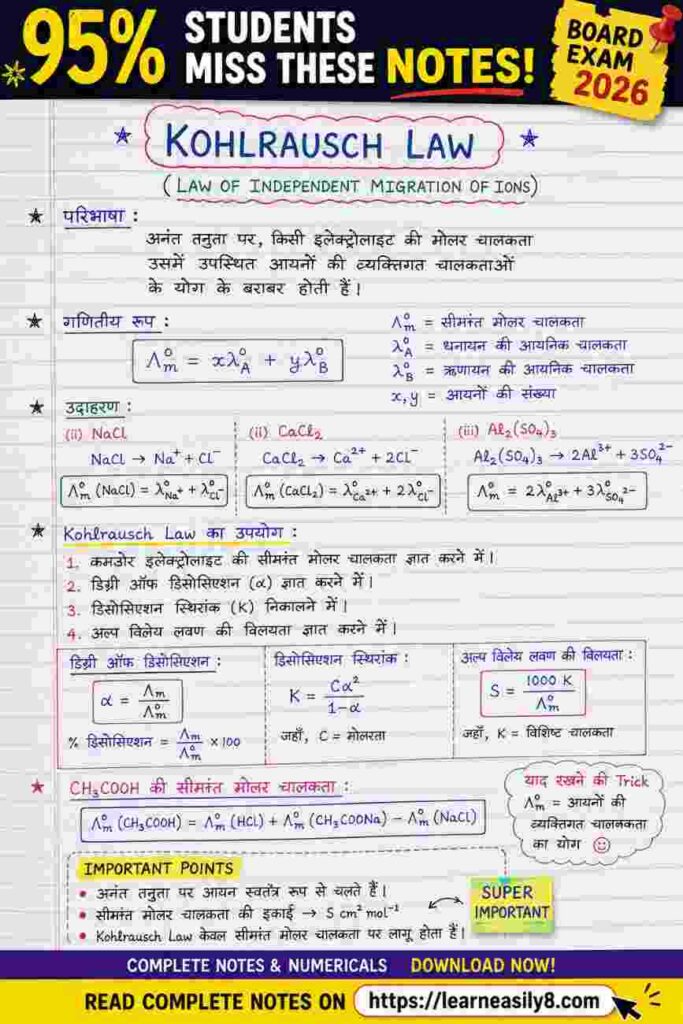
NaCl
NaCl → Na⁺ + Cl⁻
इसलिए,
KCl
CaCl₂
CaCl₂ → Ca²⁺ + 2Cl⁻
इसलिए,
Al₂(SO₄)₃
Al₂(SO₄)₃ → 2Al³⁺ + 3SO₄²⁻
Limiting Molar Conductivity क्या है?
जब किसी electrolyte के solution को लगातार dilute किया जाता है और dilution इतना अधिक हो जाता है कि ions एक-दूसरे से लगभग independent हो जाते हैं, तब प्राप्त molar conductivity को limiting molar conductivity कहते हैं।
इसे से दर्शाते हैं। यहाँ superscript (°) infinite dilution को दर्शाता है।
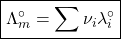
Kohlrausch Law का मुख्य सूत्र
सामान्य electrolyte  के लिए,
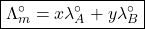
यही Kohlrausch Law का सबसे महत्वपूर्ण formula है।
Read More: Cell Potential in Electrochemistry Class 12: Definition, Formula, Calculation & Solved Examples
Weak Electrolytes के लिए Kohlrausch Law
Weak electrolytes जैसे:
- CH₃COOH
- NH₄OH
- HCOOH
की limiting molar conductivity को direct measurement से accurately प्राप्त करना कठिन होता है।
इसलिए Kohlrausch Law की सहायता से उनकी  calculate की जाती है।
उदाहरण: CH₃COOH
CH₃COOH → H⁺ + CH₃COO⁻ ∴  =
=

लेकिन individual ionic conductivities को सीधे प्राप्त करना कठिन हो सकता है। इसलिए strong electrolytes की experimentally known limiting conductivities का उपयोग किया जाता है।
Acetic Acid की Limiting Molar Conductivity
Acetic acid एक weak electrolyte है।
इसकी limiting molar conductivity निम्न relation से निकाली जा सकती है:
 के value को (
 +
+  ) में घटाया जाता है ।
यह Class 12 में बहुत महत्वपूर्ण relation है।
क्यों?
HCl:

CH₃COONa:

NaCl:

जब appropriate terms को जोड़ा और घटाया जाता है, तो  और
और  के contributions बचते हैं।
Weak Electrolyte की Degree of Dissociation
Kohlrausch Law की सहायता से weak electrolyte की degree of dissociation ((\alpha)) भी ज्ञात की जा सकती है।
Formula:

जहाँ:
 = Degree of dissociation
 = किसी concentration पर molar conductivity
- = limiting molar conductivity
 = Degree of dissociation
 = किसी concentration पर molar conductivity
Percentage dissociation:

Dissociation Constant और Kohlrausch Law
Weak electrolyte के लिए Ostwald dilution law से:

और

इसलिए:
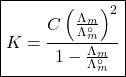
यह formula weak electrolyte के numerical problems में उपयोगी है।
Read Also: Ncert Solution of Electrochemistry: For Class 12th, Free Pdf Download
Sparingly Soluble Salt की Solubility
Kohlrausch Law का एक महत्वपूर्ण application है sparingly soluble salts की solubility निकालना।
यदि किसी sparingly soluble salt की saturated solution की conductivity  और limiting molar conductivity ज्ञात हो, तो:
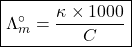
इससे:

जहाँ (C) mol L⁻¹ में concentration अर्थात solubility है।
यदि solubility (S) mol L⁻¹ है:

Conductivity और Molar Conductivity के Formula
Conductivity
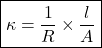
जहाँ:
- (R) = Resistance
- (l) = दूरी
- (A) = electrode area
या:

जहाँ (G) = conductance.
Molar Conductivity
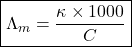
जब (C) mol L⁻¹ में हो।
Kohlrausch Law के Applications
Kohlrausch Law के प्रमुख applications निम्न हैं:
1. Weak Electrolytes की Limiting Molar Conductivity
Weak electrolytes की को strong electrolytes की conductivity से calculate किया जा सकता है।
2. Degree of Dissociation
से weak electrolyte की degree of dissociation ज्ञात की जाती है।
3. Dissociation Constant
Degree of dissociation ज्ञात होने पर:
से dissociation constant निकाला जा सकता है।
4. Sparingly Soluble Salt की Solubility
बहुत कम soluble salts की solubility conductivity measurements से calculate की जा सकती है।
5. Ionic Conductivity
किसी ion की individual contribution को calculate करने में Kohlrausch Law उपयोगी है।
6. Water की Ionic Product
कुछ परिस्थितियों में ionic conductivities के आधार पर water की ionization से संबंधित calculations की जा सकती हैं।
Important Numerical – 1
Question: यदि किसी weak electrolyte की molar conductivity  और limiting molar conductivity
  है, तो उसकी degree of dissociation ज्ञात कीजिए।
Solution:
Given:


Formula:


Percentage dissociation: 
Answer:
और percentage dissociation = 10%
Important Numerical – 2
Question: किसी weak electrolyte की molar conductivity  तथा limiting molar conductivity
  है। Degree of dissociation ज्ञात कीजिए।
Solution:

Percentage:
Answer: 10%
Important Numerical – 3
Question: किसी solution की conductivity  है और concentration
  है। उसकी molar conductivity calculate कीजिए।
Solution:
Formula:

Given:
 and
and 
Therefore:


Answer:

Important Numerical – 4: Acetic Acid
मान लीजिए: 


सभी units:

Acetic acid की limiting molar conductivity ज्ञात करें।
Solution: + – 
=426+91-126
=391
Answer:

Important Numerical – 5: Solubility
किसी sparingly soluble salt की saturated solution की conductivity:
 और उसकी limiting molar conductivity:
 है। उसकी solubility mol L⁻¹ में ज्ञात कीजिए।
Solution:
Formula:




Know More: Electrochemistry for 12th: Notes for chapter 3 of chemistry 12
Exam में पूछे जाने वाले महत्वपूर्ण प्रश्न
Very Short Answer Questions
- Kohlrausch Law क्या है?
- Limiting molar conductivity क्या होती है?
- Kohlrausch Law का mathematical expression लिखिए।
- Degree of dissociation का formula लिखिए।
- Molar conductivity का formula लिखिए।
- Kohlrausch Law का एक application लिखिए।
- Weak electrolyte की limiting molar conductivity कैसे ज्ञात की जाती है?
Short Answer Questions
- Kohlrausch Law को समझाइए।
- Kohlrausch Law की सहायता से acetic acid की limiting molar conductivity कैसे ज्ञात करते हैं?
- Kohlrausch Law के कोई तीन applications लिखिए।
- Weak electrolyte की degree of dissociation और molar conductivity के बीच relation लिखिए।
- Sparingly soluble salt की solubility conductivity से कैसे calculate की जाती है?
Long Answer Questions
प्रश्न: Kohlrausch Law को परिभाषित कीजिए तथा इसके applications समझाइए।
उत्तर के मुख्य points:
- Law की definition
- Infinite dilution
- Independent migration of ions
- Mathematical formula
- Weak electrolyte की
- Degree of dissociation
- Dissociation constant
- Sparingly soluble salt की solubility
Kohlrausch Law याद रखने की Trick
Formula:
“Number × Ionic Conductivity का Sum”
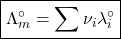
जहाँ  संबंधित ion की संख्या है।
उदाहरण:
 में:
में:
- 1 Ca²⁺
- 2 Cl⁻
इसलिए:
 +
+ 
Quick Revision Notes
| Topic | Formula / Point |
|---|---|
| Kohlrausch Law |  |
| Molar Conductivity |  |
| Degree of Dissociation |  |
| % Dissociation |  |
| Dissociation Constant |  |
| Solubility |  |
| Infinite Dilution | Ions migrate independently |
Board Exam के लिए सबसे Important Points
याद रखें:
- Kohlrausch Law केवल limiting molar conductivity से directly संबंधित है।
- Infinite dilution पर ions independently migrate करते हैं।
- Weak electrolyte की direct measurement से कठिनाई के कारण Kohlrausch Law से निकाली जाती है।
 बहुत महत्वपूर्ण formula है।
- Sparingly soluble salts की solubility conductivity measurements से निर्धारित की जा सकती है।
- Numerical में units का विशेष ध्यान रखें।
- (C) यदि mol L⁻¹ में हो, तो
 का प्रयोग करें।
 बहुत महत्वपूर्ण formula है।
 का प्रयोग करें।
निष्कर्ष
Kohlrausch Law Class 12 Chemistry के Electrochemistry chapter का महत्वपूर्ण topic है। इसके द्वारा ions की independent contribution, weak electrolytes की limiting molar conductivity, degree of dissociation, dissociation constant तथा sparingly soluble salts की solubility ज्ञात की जा सकती है। बोर्ड परीक्षा की तैयारी के लिए definition + formula + applications + numerical problems को अच्छी तरह तैयार करना चाहिए।
Kohlrausch Law का सबसे महत्वपूर्ण formula:
और weak electrolyte के लिए:
इन दोनों formulas को अच्छी तरह याद करना चाहिए।