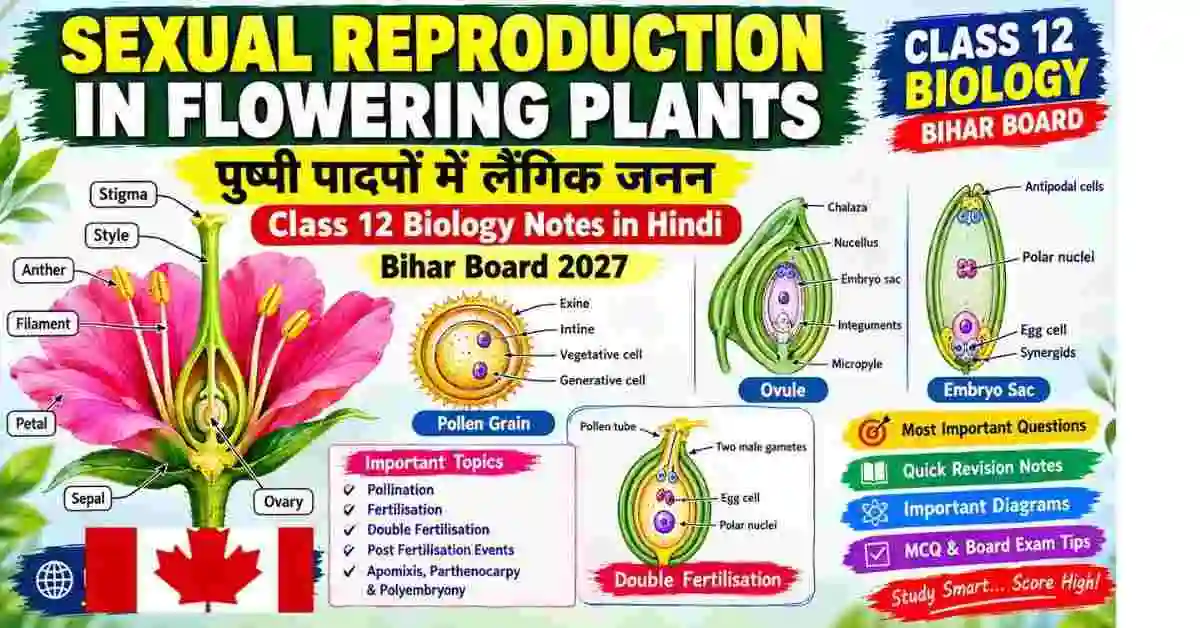
Sexual Reproduction in Flowering Plants Class 12 Biology का एक महत्वपूर्ण chapter है, जिसमें flowering plants में होने वाले लैंगिक जनन की पूरी प्रक्रिया का अध्ययन किया जाता है। इस chapter में flower की संरचना, male और female reproductive structures, pollen grain, male gametophyte, embryo sac, pollination, pollen-pistil interaction, fertilisation तथा double fertilisation को सरल भाषा में समझाया जाता है।
इसके साथ-साथ fertilisation के बाद होने वाले endosperm, embryo, seed और fruit formation की प्रक्रिया भी महत्वपूर्ण है। इस chapter में apomixis, parthenocarpy और polyembryony जैसे विशेष reproductive phenomena भी पढ़े जाते हैं।
Bihar Board Class 12 Biology परीक्षा की तैयारी करने वाले विद्यार्थियों के लिए यह chapter definitions, diagrams, short-answer questions, long-answer questions और objective questions की दृष्टि से महत्वपूर्ण है। इसलिए इस article में पूरे chapter को आसान Hindi + English भाषा में exam-oriented तरीके से समझाया गया है।
Sexual Reproduction in Flowering Plants क्या है?
Flowering plants में जब male gamete और female gamete के fusion से zygote बनता है, तो इस प्रकार के reproduction को sexual reproduction कहते हैं।
पुष्पी पौधों में sexual reproduction मुख्य रूप से flower के reproductive parts में होता है। Flower में दो प्रमुख reproductive organs होते हैं:
- Androecium – पुंकेसर (Stamen) → Male reproductive part
- Gynoecium – स्त्रीकेसर (Carpel/Pistil) → Female reproductive part
Male reproductive structure में pollen grains बनते हैं, जबकि female reproductive structure में ovules और embryo sac पाए जाते हैं।
Sexual reproduction में genetic variation उत्पन्न हो सकता है, क्योंकि इसमें दो gametes के genetic material का combination होता है।
Flower – पुष्प की संरचना
Flower flowering plants का reproductive organ है। एक typical flower में चार मुख्य whorls होते हैं:
- Calyx – दलपुंज
- Corolla – दलमंडल
- Androecium – पुंकेसर
- Gynoecium – स्त्रीकेसर
पहले दो whorls मुख्य रूप से accessory parts हैं, जबकि androecium और gynoecium reproductive parts हैं।
1. Calyx – दलपुंज
Calyx सबसे बाहरी floral whorl है। इसकी individual units को sepals कहा जाता है। Sepals सामान्यतः हरे रंग के होते हैं और developing flower की रक्षा करते हैं।
2. Corolla – दलमंडल
Corolla में petals होते हैं। ये सामान्यतः रंगीन और आकर्षक होते हैं। उनका प्रमुख कार्य pollinators को आकर्षित करने में सहायता करना है।
3. Androecium – पुंकेसर
Androecium flower का male reproductive part है। इसकी individual unit को stamen कहा जाता है।
एक typical stamen के दो प्रमुख भाग होते हैं:
- Filament – तंतु
- Anther – परागकोष
Anther में pollen grains बनते हैं।
4. Gynoecium – स्त्रीकेसर
Gynoecium flower का female reproductive part है। इसकी individual unit को carpel कहा जाता है।
इसके तीन प्रमुख भाग हैं:
- Stigma – वर्तिकाग्र
- Style – वर्तिका
- Ovary – अंडाशय
Ovary के अंदर ovules – बीजांड पाए जाते हैं।
Androecium – Male Reproductive Part
Androecium flower का male reproductive whorl है। इसका मुख्य कार्य male gametes का निर्माण करना है।
एक stamen में filament और anther होते हैं।
Anther सामान्यतः दो-lobed होता है। प्रत्येक lobe में दो pollen sacs होते हैं। इसलिए सामान्यतः एक typical anther में चार microsporangia होते हैं।
Microsporangium की संरचना
Microsporangium की wall में सामान्यतः चार layers होती हैं:
- Epidermis
- Endothecium
- Middle layers
- Tapetum
इनके अंदर sporogenous tissue पाया जाता है, जिससे pollen grains विकसित होते हैं।
Tapetum developing pollen grains को nutrition प्रदान करने वाली महत्वपूर्ण layer है।
Microsporogenesis – सूक्ष्मबीजाणुजनन
Microsporogenesis वह process है जिसमें pollen mother cells से meiosis द्वारा microspores बनते हैं।
Sporogenous tissue की cells विकसित होकर microspore mother cells (MMC) बनाती हैं।
एक microspore mother cell meiosis द्वारा चार haploid microspores बनाती है।
1 Microspore Mother Cell → Meiosis → 4 Haploid Microspores
बाद में ये microspores विकसित होकर pollen grains बनाते हैं।
Pollen Grain – परागकण
Pollen grain flowering plants का male gametophyte है।
एक सामान्य pollen grain में दो मुख्य layers होती हैं:
Exine
यह pollen grain की बाहरी और मजबूत wall होती है। Exine मुख्यतः sporopollenin से बनी होती है।
Sporopollenin अत्यधिक resistant biological substances में से एक है।
Intine
Intine pollen grain की inner wall होती है। यह मुख्यतः cellulose और pectin से बनी होती है।
Germ Pore
Exine में कुछ स्थानों पर sporopollenin absent होता है। इन स्थानों को germ pores कहते हैं। Pollen tube इन्हीं pores से निकलती है।
Pollen Grain Development
Pollen grain development में microspore mitotic division करता है।
इसके परिणामस्वरूप सामान्यतः दो cells बनती हैं:
- Vegetative cell
- Generative cell
Vegetative cell आकार में बड़ी होती है और pollen tube के विकास में सहायता करती है।
Generative cell छोटी होती है और आगे division करके दो male gametes बनाती है।
इस प्रकार mature pollen grain में male gametophyte की महत्वपूर्ण cells मौजूद होती हैं।
Gynoecium – Female Reproductive Part
Gynoecium flower का female reproductive whorl है।
एक gynoecium एक या अधिक carpels से बना हो सकता है।
Carpel के तीन मुख्य भाग हैं:
Stigma
Stigma सबसे ऊपर स्थित होता है। यह pollen grains को receive करता है।
Style
Style stigma को ovary से जोड़ता है। Pollen tube सामान्यतः style के माध्यम से ovary की ओर बढ़ती है।
Ovary
Ovary gynoecium का basal swollen portion है। इसमें ovules पाए जाते हैं।
Ovule में female gametophyte अर्थात embryo sac विकसित होता है।
Ovule – बीजांड
Ovule ovary के अंदर पाया जाता है। Ovule की संरचना में कई महत्वपूर्ण parts होते हैं:
- Funicle
- Hilum
- Integuments
- Micropyle
- Nucellus
- Chalaza
- Embryo sac
Micropyle एक छोटा opening है जिसके माध्यम से pollen tube ovule तक पहुँच सकती है।
Megasporogenesis – गुरुबीजाणुजनन
Ovule के nucellus में एक cell विकसित होकर megaspore mother cell (MMC) बनाती है।
यह cell meiosis द्वारा चार haploid megaspores बनाती है।
सामान्यतः इनमें से केवल एक functional megaspore बचता है और उससे embryo sac विकसित होता है।
Female Gametophyte – Embryo Sac
Flowering plants में mature female gametophyte को embryo sac कहते हैं।
एक सामान्य mature embryo sac:
- 7-celled
- 8-nucleate
होता है।
इसकी structure को समझना exam के लिए बहुत महत्वपूर्ण है।
Egg Apparatus
Micropylar end पर egg apparatus पाया जाता है।
इसमें:
- 1 Egg cell
- 2 Synergids
होती हैं।
Polar Nuclei
Embryo sac के centre में two polar nuclei पाए जाते हैं।
Antipodal Cells
Chalazal end पर तीन antipodal cells होती हैं।
इस प्रकार:
3 Antipodals + 2 Polar Nuclei + 3 Egg Apparatus cells = 7 cells and 8 nuclei
Pollination – परागण
Pollination pollen grains का anther से stigma तक transfer है।
यह sexual reproduction का महत्वपूर्ण step है।
Pollination मुख्यतः दो प्रकार का होता है:
- Self-pollination
- Cross-pollination
Self Pollination – स्वपरागण
जब pollen grains उसी flower या उसी plant के compatible flower के stigma पर पहुँचते हैं, तो इसे self-pollination कहते हैं।
Self-pollination के एक प्रकार autogamy में pollen transfer उसी flower के अंदर होता है।
Advantages
- Pollinating agents पर कम निर्भरता
- Genetic characteristics को बनाए रखने में सहायता
- Pollen wastage अपेक्षाकृत कम हो सकता है
Cross Pollination – परपरागण
जब pollen grains एक plant के flower से दूसरे compatible plant के flower के stigma तक transfer होते हैं, तो इसे cross-pollination या xenogamy कहते हैं।
इसमें genetic variation की संभावना अधिक होती है।
Cross-pollination में विभिन्न agents सहायता करते हैं।
Agents of Pollination
Pollination के प्रमुख agents हैं:
- Wind – वायु
- Water – जल
- Insects – कीट
- Birds – पक्षी
- अन्य animals
Wind-pollinated flowers में pollen grains सामान्यतः हल्के और अधिक मात्रा में हो सकते हैं।
Insect-pollinated flowers में रंग, fragrance और nectar pollinators को आकर्षित करने में सहायता कर सकते हैं।
Outbreeding Devices
Flowering plants self-pollination को रोकने और cross-pollination को बढ़ावा देने के लिए कई mechanisms विकसित करते हैं। इन्हें outbreeding devices कहा जाता है।
मुख्य उदाहरण:
1. Dichogamy
Anther और stigma अलग-अलग समय पर mature होते हैं।
2. Herkogamy
Anther और stigma की position ऐसी होती है कि self-pollination कठिन हो जाती है।
3. Self-incompatibility
कुछ plants में genetic mechanism के कारण अपने ही pollen द्वारा fertilisation नहीं हो पाता।
4. Unisexual Flowers
Male और female flowers अलग-अलग हो सकते हैं, जिससे self-pollination की संभावना कम होती है।
Pollen-Pistil Interaction
जब pollen grain stigma पर पहुँचता है, तो stigma pollen को पहचानने की प्रक्रिया शुरू करता है।
यदि pollen compatible है, तो pollen germinate करके pollen tube बनाता है।
Pollen tube style से होकर ovary की ओर बढ़ती है और फिर ovule तक पहुँचती है।
यह interaction compatible और incompatible pollen को पहचानने में महत्वपूर्ण है।
Pollen Tube
Compatible pollen grain stigma पर germinate करता है और एक pollen tube विकसित करता है।
Pollen tube:
Stigma → Style → Ovary → Ovule
की दिशा में आगे बढ़ती है।
Pollen tube ovule में सामान्यतः micropyle के माध्यम से प्रवेश करती है।
Fertilisation – निषेचन
Male gamete और female gamete के fusion को fertilisation कहते हैं।
Flowering plants में pollen tube दो male gametes को embryo sac तक पहुँचाती है।
एक male gamete egg cell से fuse करता है और zygote बनाता है।
Male gamete + Egg → Zygote
Double Fertilisation – द्विनिषेचन
Angiosperms की सबसे महत्वपूर्ण विशेषताओं में से एक double fertilisation है।
इसमें दो fusion events होते हैं:
Syngamy
एक male gamete + egg cell → zygote
Triple Fusion
दूसरा male gamete + two polar nuclei → primary endosperm nucleus
इन दोनों events को मिलाकर double fertilisation कहा जाता है।
यह flowering plants की characteristic feature है।
Significance of Double Fertilisation
Double fertilisation के कारण:
- Zygote बनता है।
- Embryo development शुरू होता है।
- Endosperm बनता है।
- Developing embryo को nutrition मिलता है।
- Seed development में सहायता मिलती है।
Double fertilisation flowering plants में reproductive success के लिए अत्यंत महत्वपूर्ण है।
Read Also: Biomolecules MCQ in Hindi for Bihar Board Class 12 | जैव-अणु के 50 महत्वपूर्ण वस्तुनिष्ठ प्रश्न
Post-Fertilisation Events
Fertilisation के बाद flower में कई महत्वपूर्ण changes होते हैं।
मुख्य post-fertilisation events हैं:
- Endosperm development
- Embryo development
- Seed formation
- Fruit formation
Endosperm Development
Triple fusion के बाद primary endosperm nucleus बनता है।
यह आगे divisions करके endosperm tissue बनाता है।
Endosperm developing embryo को nutrition प्रदान करता है।
इसलिए endosperm seed development में महत्वपूर्ण role निभाता है।
Embryo Development
Fertilisation के बाद zygote embryo में विकसित होता है।
Zygote में successive divisions होती हैं और embryo का development शुरू होता है।
Embryo में आगे:
- Radicle
- Plumule
- Cotyledons
- Embryonal axis
जैसी structures विकसित होती हैं।
Seed Formation – बीज निर्माण
Fertilisation के बाद ovule धीरे-धीरे seed में बदल जाता है।
सामान्य रूप से:
Ovule → Seed
Seed में embryo और food reserve पाए जा सकते हैं।
Seed plant की next generation को जन्म देने में महत्वपूर्ण role निभाता है।
Fruit Formation – फल निर्माण
Fertilisation के बाद ovary सामान्यतः fruit में विकसित होती है।
Ovary → Fruit
Ovary wall आगे fruit wall या pericarp में बदल सकती है।
कुछ fruits fertilisation के बिना भी develop हो सकते हैं। इसे parthenocarpy कहते हैं।
Special Modes of Reproduction
Flowering plants में कुछ special reproductive phenomena भी पाए जाते हैं:
- Apomixis
- Parthenocarpy
- Polyembryony
Apomixis – असंगजनिक जनन
Apomixis वह phenomenon है जिसमें sexual fertilisation के बिना seed formation हो सकती है।
इसमें embryo fertilisation के बिना develop कर सकता है।
Apomixis agriculture और plant breeding में महत्वपूर्ण है क्योंकि कुछ desirable traits को बनाए रखने में इसका उपयोग किया जा सकता है।
Parthenocarpy – अनिषेकफलन
जब fertilisation के बिना fruit develop होता है, तो इसे parthenocarpy कहते हैं।
ऐसे fruits में अक्सर seeds absent या बहुत कम हो सकते हैं।
Seedless fruits इसका सामान्य उदाहरण हैं।
Polyembryony – बहुभ्रूणता
जब एक seed में एक से अधिक embryos विकसित होते हैं, तो इसे polyembryony कहते हैं।
यह phenomenon कुछ plant species में naturally पाया जाता है।
Apomixis और Parthenocarpy में अंतर
| Apomixis | Parthenocarpy |
|---|---|
| Fertilisation के बिना embryo/seed development | Fertilisation के बिना fruit development |
| Seed formation से संबंधित | Fruit formation से संबंधित |
| Embryo development महत्वपूर्ण है | Fruit development महत्वपूर्ण है |
Important Differences
Pollen Grain और Ovule में अंतर
| Pollen Grain | Ovule |
|---|---|
| Male reproductive structure/gametophytic unit | Female reproductive structure |
| Anther में बनता है | Ovary में पाया जाता है |
| Male gametes से संबंधित | Female gametophyte से संबंधित |
| Stigma तक पहुँचता है | Fertilisation के बाद seed बन सकता है |
Pollination और Fertilisation में अंतर
| Pollination | Fertilisation |
|---|---|
| Pollen का stigma तक transfer | Male और female gametes का fusion |
| Fertilisation से पहले होता है | Pollination के बाद होता है |
| इसमें gamete fusion नहीं होता | इसमें gamete fusion होता है |
Class 12 Biology Important Definitions
1. Pollination
Anther से stigma तक pollen grains का transfer pollination कहलाता है।
2. Fertilisation
Male और female gametes के fusion को fertilisation कहते हैं।
3. Double Fertilisation
Syngamy और triple fusion के संयुक्त occurrence को double fertilisation कहते हैं।
4. Microsporogenesis
Microspore mother cell से meiosis द्वारा microspores बनने की प्रक्रिया microsporogenesis कहलाती है।
5. Megasporogenesis
Megaspore mother cell से meiosis द्वारा megaspores बनने की प्रक्रिया megasporogenesis कहलाती है।
6. Apomixis
Fertilisation के बिना seed formation की प्रक्रिया को apomixis कहते हैं।
7. Parthenocarpy
Fertilisation के बिना fruit development को parthenocarpy कहते हैं।
8. Polyembryony
एक seed में एक से अधिक embryos के development को polyembryony कहते हैं।
Class 12 Biology Important Questions
Short Answer Questions
Q1. Flower का male reproductive part कौन-सा है?
Answer: Flower का male reproductive part androecium है। इसकी individual unit stamen कहलाती है।
Q2. Flower का female reproductive part कौन-सा है?
Answer: Flower का female reproductive part gynoecium है। इसकी individual unit carpel कहलाती है।
Q3. Pollen grain कहाँ बनता है?
Answer: Pollen grains anther के microsporangia में बनते हैं।
Q4. Embryo sac क्या है?
Answer: Flowering plants का mature female gametophyte embryo sac कहलाता है।
Q5. Typical embryo sac में कितनी cells और nuclei होती हैं?
Answer: Typical embryo sac 7-celled और 8-nucleate होता है।
Q6. Double fertilisation क्या है?
Answer: Angiosperms में syngamy और triple fusion के होने को double fertilisation कहते हैं।
Q7. Triple fusion क्या है?
Answer: Second male gamete का two polar nuclei के साथ fusion triple fusion कहलाता है।
Q8. Sporopollenin क्या है?
Answer: Sporopollenin pollen grain की exine में पाया जाने वाला अत्यधिक resistant substance है।
Q9. Apomixis क्या है?
Answer: Fertilisation के बिना seed formation को apomixis कहते हैं।
Q10. Parthenocarpy क्या है?
Answer: Fertilisation के बिना fruit development को parthenocarpy कहते हैं।
Long Answer Questions
Q1. Typical flower की संरचना समझाइए।
Answer:
एक typical flower में चार floral whorls होते हैं—calyx, corolla, androecium और gynoecium। Calyx sepals से बना होता है और developing flower की रक्षा करता है। Corolla petals से बना होता है और pollinators को attract कर सकता है। Androecium male reproductive whorl है, जिसमें stamens होते हैं। Gynoecium female reproductive whorl है, जिसमें stigma, style और ovary शामिल होते हैं। Ovary के अंदर ovules पाए जाते हैं।
Q2. Double fertilisation को समझाइए।
Answer:
Pollen tube दो male gametes को embryo sac तक पहुँचाती है। पहला male gamete egg cell के साथ fuse करके diploid zygote बनाता है। इस fusion को syngamy कहते हैं। दूसरा male gamete two polar nuclei के साथ fuse करके primary endosperm nucleus बनाता है। इस fusion को triple fusion कहते हैं। Syngamy और triple fusion दोनों को मिलाकर double fertilisation कहा जाता है।
Q3. Male gametophyte के development को समझाइए।
Answer:
Microspore mother cell meiosis द्वारा चार haploid microspores बनाती है। प्रत्येक microspore आगे develop होकर pollen grain बनता है। Pollen grain में vegetative cell और generative cell बनती हैं। Generative cell आगे division करके दो male gametes बनाती है। इस प्रकार mature pollen grain male gametophyte की reproductive unit के रूप में कार्य करता है।
Know More: Ncert solution of Biomolecules: Free Pdf Download Class 12th
30 Important MCQs – Sexual Reproduction in Flowering Plants
1. Flower का male reproductive part कौन-सा है?
A. Gynoecium
B. Androecium
C. Corolla
D. Calyx
Correct Answer: B. Androecium
2. Pollen grains कहाँ बनते हैं?
A. Ovary
B. Stigma
C. Anther
D. Style
Correct Answer: C. Anther
3. Typical anther में microsporangia की संख्या कितनी होती है?
A. 1
B. 2
C. 3
D. 4
Correct Answer: D. 4
4. Pollen grain की outer wall कहलाती है:
A. Intine
B. Exine
C. Epidermis
D. Cuticle
Correct Answer: B. Exine
5. Exine मुख्यतः किस substance से बनी होती है?
A. Cellulose
B. Protein
C. Sporopollenin
D. Starch
Correct Answer: C. Sporopollenin
6. Flowering plants का female gametophyte क्या कहलाता है?
A. Pollen grain
B. Embryo
C. Embryo sac
D. Ovary
Correct Answer: C. Embryo sac
7. Typical embryo sac होता है:
A. 7-celled, 8-nucleate
B. 8-celled, 7-nucleate
C. 8-celled, 8-nucleate
D. 6-celled, 8-nucleate
Correct Answer: A. 7-celled, 8-nucleate
8. Egg apparatus में कितनी cells होती हैं?
A. 2
B. 3
C. 4
D. 5
Correct Answer: B. 3
9. Egg apparatus में कितनी synergids होती हैं?
A. 1
B. 2
C. 3
D. 4
Correct Answer: B. 2
10. Antipodal cells की संख्या होती है:
A. 2
B. 3
C. 4
D. 5
Correct Answer: B. 3
11. Pollination का अर्थ है:
A. Gamete fusion
B. Seed formation
C. Pollen transfer to stigma
D. Fruit formation
Correct Answer: C. Pollen transfer to stigma
12. Male और female gamete के fusion को कहते हैं:
A. Pollination
B. Fertilisation
C. Germination
D. Sporogenesis
Correct Answer: B. Fertilisation
13. Double fertilisation किस group की characteristic feature है?
A. Algae
B. Bryophytes
C. Gymnosperms
D. Angiosperms
Correct Answer: D. Angiosperms
14. Syngamy से बनता है:
A. Endosperm
B. Zygote
C. Pollen grain
D. Fruit
Correct Answer: B. Zygote
15. Triple fusion से बनता है:
A. Zygote
B. Embryo
C. Primary endosperm nucleus
D. Pollen tube
Correct Answer: C. Primary endosperm nucleus
16. Ovule fertilisation के बाद सामान्यतः बनता है:
A. Fruit
B. Seed
C. Flower
D. Pollen
Correct Answer: B. Seed
17. Ovary fertilisation के बाद सामान्यतः बनती है:
A. Seed
B. Embryo
C. Fruit
D. Pollen
Correct Answer: C. Fruit
18. Fertilisation के बिना fruit formation कहलाता है:
A. Apomixis
B. Parthenocarpy
C. Polyembryony
D. Syngamy
Correct Answer: B. Parthenocarpy
19. एक seed में कई embryos का होना कहलाता है:
A. Polyembryony
B. Parthenocarpy
C. Pollination
D. Triple fusion
Correct Answer: A. Polyembryony
20. Fertilisation के बिना seed formation कहलाता है:
A. Pollination
B. Apomixis
C. Syngamy
D. Germination
Correct Answer: B. Apomixis
21. Pollen tube सामान्यतः ovule में किस opening से प्रवेश करती है?
A. Chalaza
B. Micropyle
C. Funicle
D. Hilum
Correct Answer: B. Micropyle
22. Pollen tube का मुख्य कार्य है:
A. Fruit बनाना
B. Male gametes को embryo sac तक पहुँचाना
C. Seed coat बनाना
D. Ovule बनाना
Correct Answer: B. Male gametes को embryo sac तक पहुँचाना
23. Tapetum का प्रमुख कार्य है:
A. Pollen development को nutrition देना
B. Fruit formation
C. Seed dispersal
D. Pollination रोकना
Correct Answer: A. Pollen development को nutrition देना
24. Microsporogenesis में मुख्य division है:
A. Mitosis
B. Meiosis
C. Binary fission
D. Amitosis
Correct Answer: B. Meiosis
25. Megasporogenesis किससे संबंधित है?
A. Pollen formation
B. Megaspore formation
C. Fruit formation
D. Seed dispersal
Correct Answer: B. Megaspore formation
26. Gynoecium के तीन प्रमुख parts हैं:
A. Filament, anther, pollen
B. Stigma, style, ovary
C. Sepal, petal, anther
D. Ovule, pollen, seed
Correct Answer: B. Stigma, style, ovary
27. Stamen के प्रमुख parts हैं:
A. Stigma और style
B. Filament और anther
C. Ovary और ovule
D. Petal और sepal
Correct Answer: B. Filament और anther
28. Cross-pollination को कहा जाता है:
A. Autogamy
B. Xenogamy
C. Apomixis
D. Parthenocarpy
Correct Answer: B. Xenogamy
29. Same flower में pollen transfer को कहा जाता है:
A. Autogamy
B. Xenogamy
C. Geitonogamy
D. Apomixis
Correct Answer: A. Autogamy
30. Developing embryo को nutrition मुख्यतः कौन-सा tissue प्रदान करता है?
A. Endosperm
B. Exine
C. Stigma
D. Filament
Correct Answer: A. Endosperm
One-Liner Revision Questions
- Male reproductive part of flower: Androecium
- Female reproductive part: Gynoecium
- Male gametophyte: Pollen grain
- Female gametophyte: Embryo sac
- Outer pollen wall: Exine
- Main substance of exine: Sporopollenin
- Pollen-receiving part: Stigma
- Basal part of carpel: Ovary
- Ovule is present in: Ovary
- Typical embryo sac: 7-celled, 8-nucleate
- Egg apparatus: 1 egg + 2 synergids
- Antipodals: 3
- Pollination: Transfer of pollen to stigma
- Male + female gamete: Zygote
- Syngamy product: Zygote
- Triple fusion product: Primary endosperm nucleus
- Ovule becomes: Seed
- Ovary becomes: Fruit
- Seed without fertilisation: Apomixis
- Fruit without fertilisation: Parthenocarpy
- Multiple embryos in one seed: Polyembryony
- Pollen tube enters ovule through: Micropyle
- Nutritive layer of anther: Tapetum
- Pollen mother cell division: Meiosis
- Characteristic feature of angiosperms: Double fertilisation
Board Exam Revision Notes
Exam से पहले इस chapter में इन topics को विशेष रूप से revise करें:
- Flower structure
- Structure of anther
- Microsporogenesis
- Pollen grain structure
- Structure of ovule
- Megasporogenesis
- Embryo sac
- Types of pollination
- Agents of pollination
- Outbreeding devices
- Pollen-pistil interaction
- Pollen tube growth
- Fertilisation
- Double fertilisation
- Endosperm development
- Embryo development
- Seed formation
- Fruit formation
- Apomixis
- Parthenocarpy
- Polyembryony
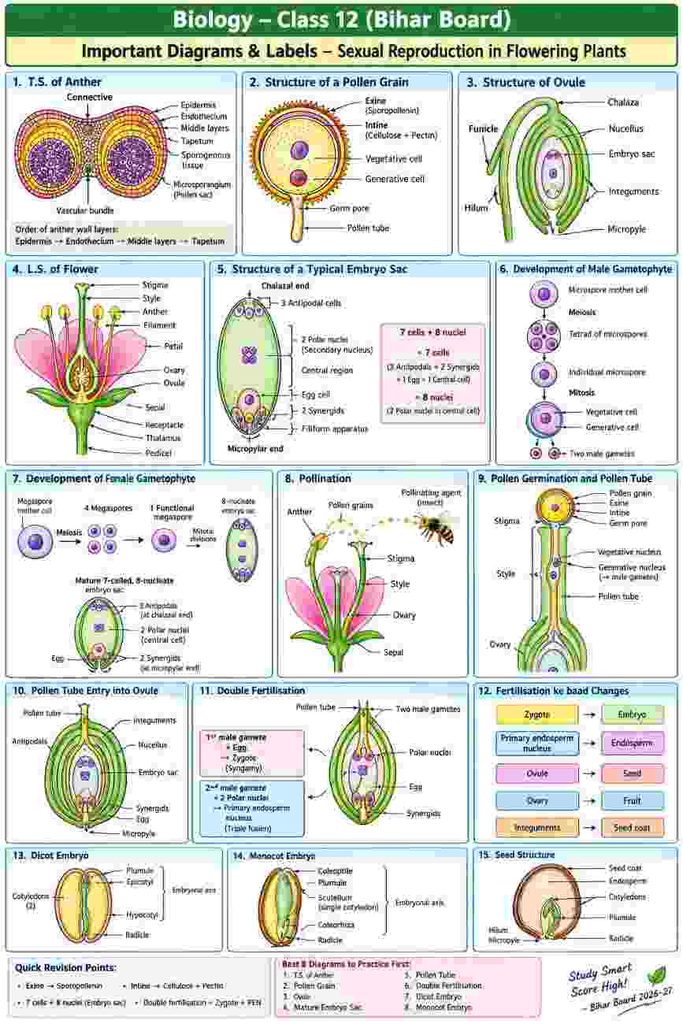
Diagram Practice: Anther, pollen grain, ovule, embryo sac और double fertilisation के diagrams को labelled form में जरूर practice करें।
For More Details: पुष्पी पादपों में लैंगिक जनन | PDF
Frequently Asked Questions (FAQs)
Q1. Sexual Reproduction in Flowering Plants Class 12 Biology का कौन-सा chapter है?
यह NCERT Class 12 Biology का Chapter 1 है।
Q2. Double fertilisation क्या है?
एक male gamete का egg के साथ fusion और दूसरे male gamete का polar nuclei के साथ fusion होने की संयुक्त प्रक्रिया को double fertilisation कहते हैं।
Q3. Embryo sac कितनी cells और nuclei वाला होता है?
Typical mature embryo sac 7-celled और 8-nucleate होता है।
Q4. Apomixis और parthenocarpy में क्या अंतर है?
Apomixis में fertilisation के बिना seed/embryo development हो सकता है, जबकि parthenocarpy में fertilisation के बिना fruit development होता है।
Q5. Pollen grain की outer wall किसकी बनी होती है?
Pollen grain की outer wall exine मुख्यतः sporopollenin से बनी होती है।
Q6. Fertilisation के बाद ovule और ovary का क्या होता है?
Fertilisation के बाद ovule सामान्यतः seed और ovary सामान्यतः fruit में विकसित होती है।
Q7. Pollen tube ovule में कहाँ से प्रवेश करती है?
Pollen tube सामान्यतः micropyle के माध्यम से ovule में प्रवेश करती है।
निष्कर्ष
Sexual Reproduction in Flowering Plants Class 12 Biology का एक fundamental chapter है। इसमें flower की reproductive structure से लेकर pollen formation, pollination, pollen-pistil interaction, fertilisation और seed तथा fruit formation तक की पूरी प्रक्रिया समझाई जाती है।
इस chapter में double fertilisation, embryo sac, microsporogenesis, megasporogenesis, apomixis, parthenocarpy और polyembryony विशेष रूप से महत्वपूर्ण concepts हैं। Bihar Board की तैयारी करने वाले विद्यार्थियों को केवल theory पढ़ने के बजाय important diagrams, definitions, differences, short questions और MCQs का भी नियमित अभ्यास करना चाहिए।
NCERT के official Biology syllabus में इस chapter के अंतर्गत flower structure, male/female gametophyte, pollination, pollen-pistil interaction, double fertilisation, post-fertilisation events तथा special modes जैसे apomixis, parthenocarpy और polyembryony शामिल हैं।
Quick Tip: परीक्षा से पहले इस chapter के diagrams और one-line definitions को दोहराना आपकी revision को अधिक व्यवस्थित बना सकता है।